
Table of Contents
- Introduction
- Why Footwork Is the Foundation of Tennis Performance
- The Connection Between Movement and Shot Quality
- Basic Tennis Footwork Patterns Every Beginner Learns
- Split Step: The Most Important Movement in Tennis
- Side Steps, Crossover Steps, and Recovery Positioning
- How Footwork Affects Timing and Balance
- Common Footwork Mistakes Beginners Make
- How Coaches Train Footwork in Tennis Lessons in Singapore
- Why Footwork Improves Consistency More Than Power
- Simple Footwork Drills You Can Practice Anywhere
- How Long It Takes to See Improvement in Footwork
- Conclusion
1. Introduction
Many beginners focus heavily on learning how to swing the racket, but one of the biggest differences between casual players and strong players is not the swing itself—it is how they move. Footwork determines whether you reach the ball in time, whether you are balanced when hitting, and how consistent your shots are.
In tennis lessons in Singapore, coaches often spend significant time training movement because it directly affects how quickly a player improves overall performance.
2. Why Footwork Is the Foundation of Tennis Performance
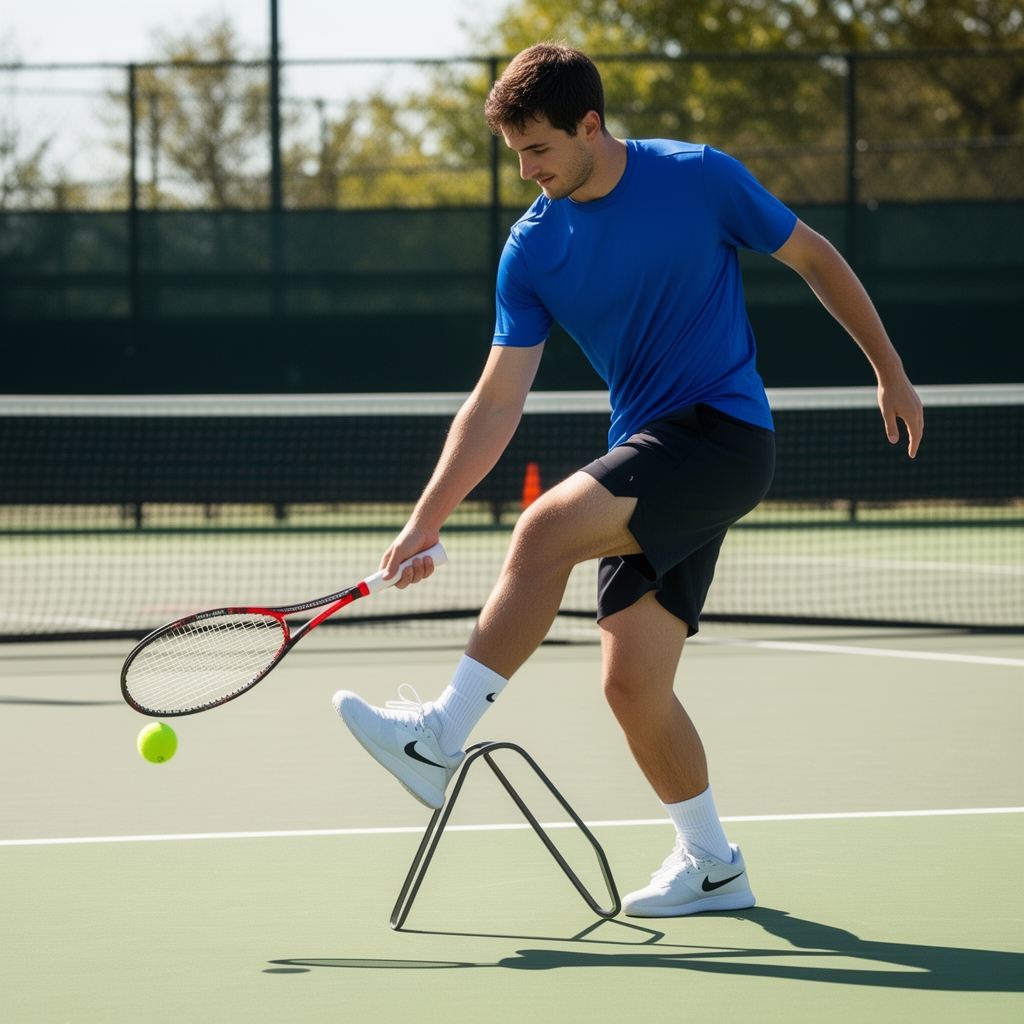
Footwork is the foundation of tennis because every shot begins with positioning. Even a perfect swing will fail if the player is not in the correct position to hit the ball.
Good movement allows you to arrive early, set your stance, and prepare your swing without rushing. Poor movement forces you to stretch, hit off-balance, or react late.
This is why experienced players often appear “effortless”—not because they hit harder, but because they move more efficiently.
3. The Connection Between Movement and Shot Quality
Shot quality is directly influenced by how well you move before contact.
When you are well-positioned, your body can stay stable and generate controlled power. When you are late, your swing becomes rushed and inconsistent.
Footwork also affects shot selection. Better positioning gives you more time to decide whether to hit cross-court, down the line, or play defensively.
In simple terms, better movement equals better decisions and better shots.
4. Basic Tennis Footwork Patterns Every Beginner Learns
Beginners are introduced to several fundamental movement patterns.
The first is simple split-step timing, which prepares the body before the opponent hits the ball.
Side steps are used for short lateral movements when the ball is nearby.
Crossover steps help cover larger distances quickly when the ball is far away.
Recovery steps bring the player back to a neutral position after each shot.
These patterns are repeatedly trained in lessons until they become automatic.
5. Split Step: The Most Important Movement in Tennis
The split step is a small jump or bounce performed just before the opponent hits the ball.
It allows the player to react quickly in any direction. Without it, movement becomes slower and less responsive.
The split step acts like a reset point, preparing the body for explosive movement.
Coaches emphasize this movement early because it improves reaction time dramatically.
6. Side Steps, Crossover Steps, and Recovery Positioning
Side steps are used when the ball is close and does not require large movement. They help maintain balance and readiness.
Crossover steps are used for longer distances. They allow faster coverage of the court without losing momentum.
Recovery positioning is what happens after a shot. Returning to a central position ensures readiness for the next ball.
Together, these movements form a continuous cycle of movement, hit, and recovery.
7. How Footwork Affects Timing and Balance
Timing in tennis depends heavily on footwork. If you arrive too early or too late, your swing becomes unstable.
Good footwork allows you to meet the ball at the ideal contact point, improving accuracy and control.
Balance is also critical. When your feet are properly positioned, your upper body can swing freely without strain.
Poor movement leads to off-balance shots, which often result in errors.
8. Common Footwork Mistakes Beginners Make
One common mistake is standing still after hitting the ball instead of recovering quickly.
Another issue is reaching for the ball with the arm instead of moving the feet.
Many beginners also forget the split step, which reduces reaction speed significantly.
Some players rely too much on upper body strength and ignore lower body movement entirely.
These habits slow down overall improvement if not corrected early.
9. How Coaches Train Footwork in Tennis Lessons in Singapore
In structured tennis lessons in Singapore, coaches integrate footwork into almost every drill.
Instead of static hitting, players are asked to move before and after each shot.
Cones, directional drills, and rally-based exercises are commonly used to improve movement patterns.
Coaches also correct timing, ensuring players perform split steps at the right moment.
This repeated exposure builds natural movement habits over time.
10. Why Footwork Improves Consistency More Than Power
Many beginners believe power is the key to improvement, but consistency comes from positioning, not strength.
Good footwork allows cleaner contact, which leads to more accurate shots.
When you are always in the right position, even moderate swings produce reliable results.
This is why players with excellent movement often outperform stronger hitters.
11. Simple Footwork Drills You Can Practice Anywhere
Footwork can be trained even without a court.
Shadow movement drills help simulate court positioning and swing preparation.
Side-to-side movement exercises improve agility and coordination.
Split-step timing drills can be practiced by reacting to visual or auditory cues.
These simple exercises reinforce habits learned during lessons.
12. How Long It Takes to See Improvement in Footwork
Footwork improvement depends on consistency, but noticeable changes often appear within a few weeks of regular training.
Beginners usually start feeling more balanced and responsive after consistent lessons.
Over time, movement becomes more natural and requires less conscious effort.
The key is repetition and integration into every training session.
13. Conclusion
Footwork is one of the most important yet underrated aspects of tennis development. In structured training environments like tennis lessons in Singapore, it is a core focus because it directly influences every part of the game.
Improving movement leads to better timing, better balance, and ultimately better performance, often faster than technical changes alone.