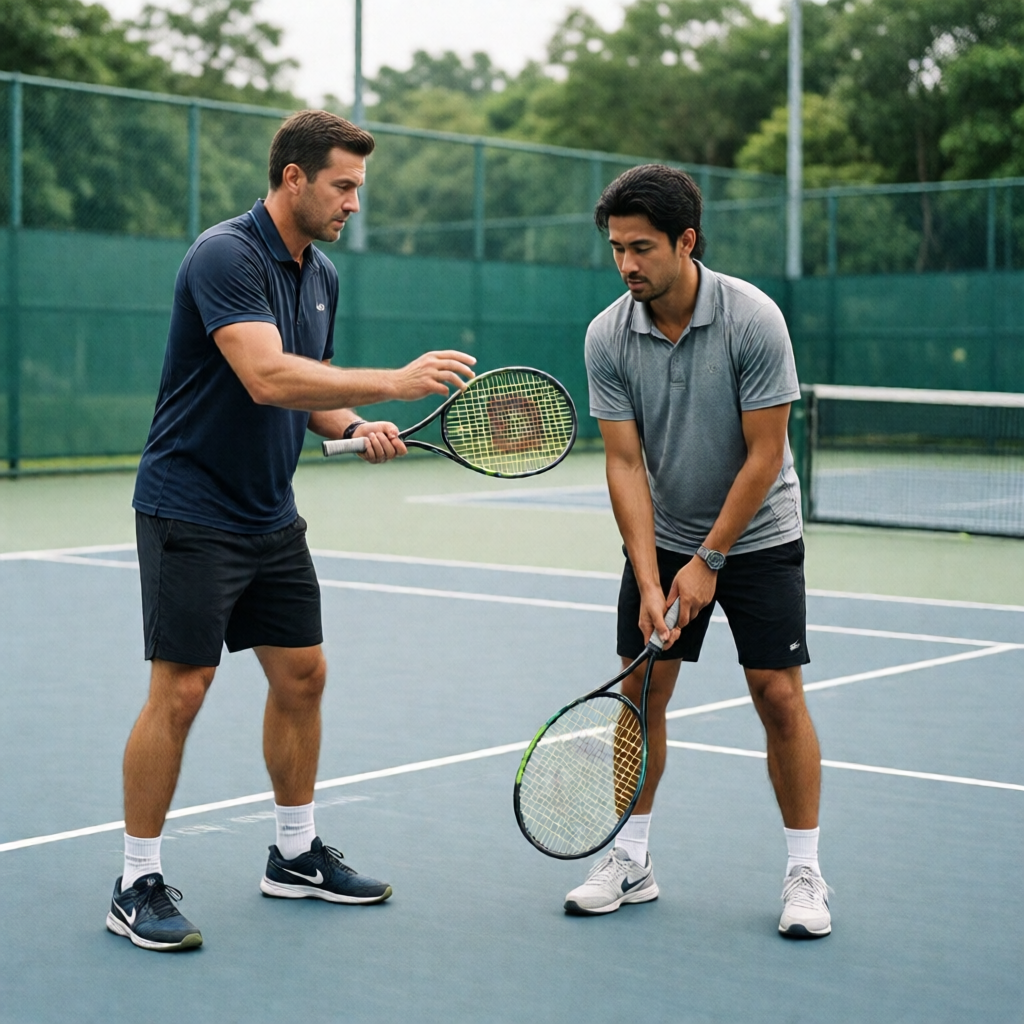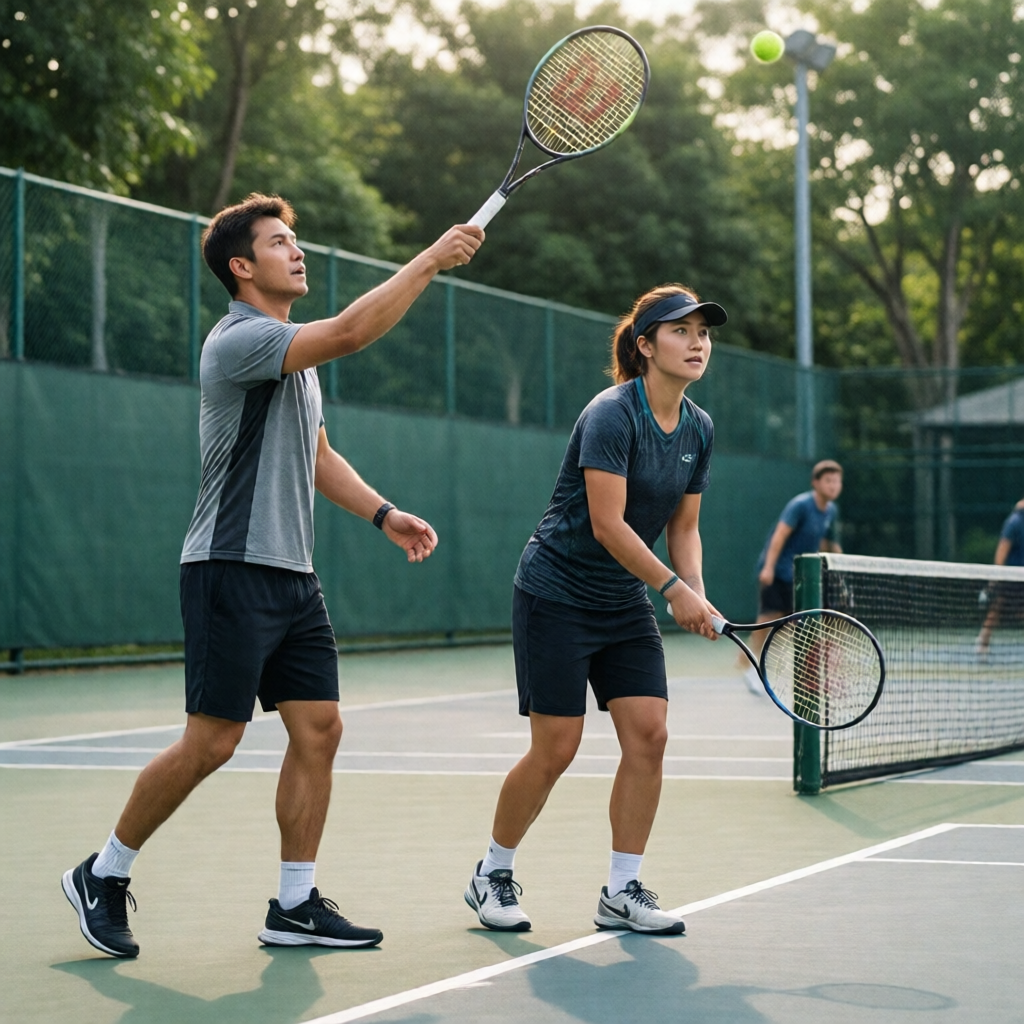
Being able to hit an impressive tennis shot is one thing. Being able to repeat that shot consistently during a rally is another. For many recreational players, inconsistency is one of the biggest obstacles between practising tennis and playing confident points.
This is where structured tennis lessons can make a difference. Instead of simply hitting harder or attempting more difficult shots, players can learn how to control their technique, movement, timing, and decision-making so they can keep the ball in play more reliably.
Whether you are a beginner or an intermediate player in Singapore, improving rally consistency can make your tennis more enjoyable and help you perform more confidently during games.
Table of Contents
- Why Rally Consistency Matters
- Understanding What Causes Inconsistent Rallies
- Building Reliable Groundstrokes
- Improving Timing and Contact
- Learning to Control Ball Height and Depth
- How Footwork Supports Consistency
- Developing Better Recovery Habits
- Practising Consistency During Tennis Lessons
- Progressing From Cooperative Rallies to Points
- Common Mistakes That Reduce Rally Consistency
- How to Practise Between Tennis Lessons
- Final Thoughts
Why Rally Consistency Matters
Tennis points are rarely decided by one spectacular shot alone. Players need to repeatedly execute reasonably controlled shots while responding to what their opponent sends across the net.
A player who can maintain a rally for several shots has more opportunities to create an attacking situation.
Consistency is particularly important for beginners because it provides a foundation for learning more advanced skills. Before focusing heavily on power, spin, or complicated tactics, players need enough control to keep the ball within the court.
During tennis lessons, a coach can help develop this control through progressive exercises that make consistency a specific training objective.
Understanding What Causes Inconsistent Rallies
Inconsistent tennis can have many causes.
Some players make technical mistakes. Others have difficulty moving into the correct position before hitting the ball. Poor timing, excessive swing speed, incorrect contact points, and poor shot selection can also contribute.
A player might hit ten excellent forehands during a simple drill but struggle to reproduce them during a rally because the ball arrives at different speeds and locations.
This is why simply hitting more balls is not always enough.
A coach can observe the player’s movement and technique and determine whether the problem is related to preparation, positioning, contact, balance, or decision-making.
Building Reliable Groundstrokes
Groundstrokes are usually an important part of rally development.
For beginners, a coach may first establish a repeatable forehand and backhand movement. The objective is not necessarily to produce maximum power but to develop a motion that can be reproduced consistently.
A structured lesson may gradually introduce:
- Forehand consistency
- Backhand consistency
- Cross-court rallies
- Directional control
- Different ball heights
- Movement before contact
- Recovery after each shot
As the player becomes more comfortable, the coach can increase the difficulty.
This gradual progression helps prevent players from trying to perform advanced shots before they have sufficient control.
Improving Timing and Contact
Timing plays a major role in rally consistency.
Even technically sound players can struggle when they contact the ball too early or too late.
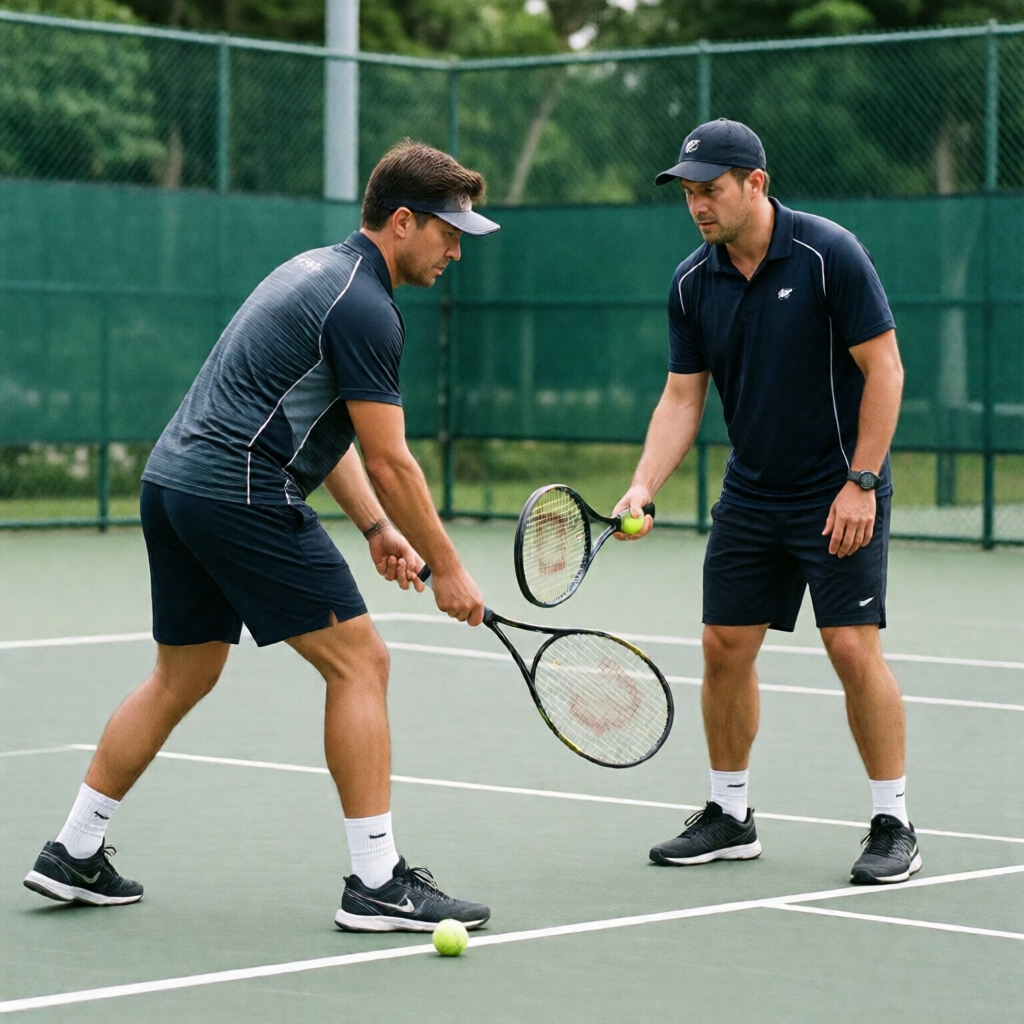
Tennis lessons can help players recognise the correct contact zone and prepare the racket earlier. Coaches can also adjust the speed and location of feeds so that players learn to adapt rather than rely on one predictable ball.
When timing improves, players often gain better control without needing to swing harder.
The objective is to make the contact point more predictable and repeatable.
Learning to Control Ball Height and Depth
Rally consistency is not simply about getting the ball over the net. Players also need to learn how much height and depth to use.
A ball hit too low may end up in the net, while a ball hit with insufficient depth may allow an opponent to attack.
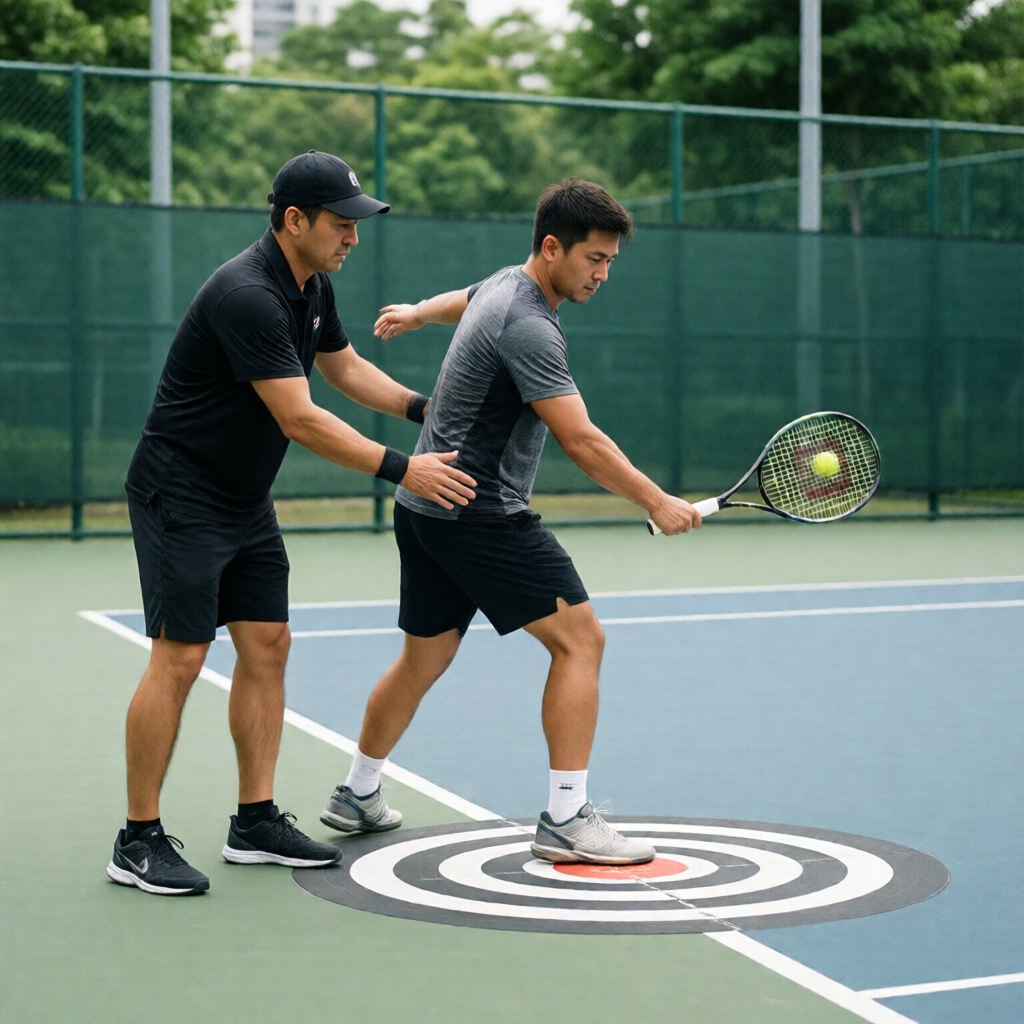
During tennis lessons, coaches can introduce target areas on the court and ask players to maintain a particular trajectory.
For example, a player might practise sending several balls deep toward the opponent’s baseline rather than simply trying to hit the ball as hard as possible.
This develops control while giving the player a clearer understanding of where the ball should travel.
How Footwork Supports Consistency
A large percentage of inconsistent shots can be connected to poor positioning.
If a player reaches the ball late or contacts it while off balance, even a technically good stroke can become difficult to control.
Footwork training helps players arrive in a better position before making contact.
A coach may introduce side-to-side movement, recovery steps, split-step practice, and drills requiring the player to respond to different ball locations.
The goal is to make good positioning part of the player’s normal movement pattern.
When players consistently arrive in a suitable hitting position, their strokes generally become easier to repeat.
Developing Better Recovery Habits
The shot does not end when the racket makes contact with the ball.
After hitting, players need to recover into a position that allows them to respond to the next shot.
This is especially important during baseline rallies.
A coach may therefore incorporate recovery into ordinary stroke drills. After hitting a forehand, the player may be required to recover before moving toward the next ball.
Over time, this teaches players to think about the complete movement sequence rather than treating each stroke as an isolated action.
Better recovery can also reduce the amount of court the player needs to cover on the next shot.
Practising Consistency During Tennis Lessons
A coach can create drills specifically designed to improve rally tolerance.
One simple progression is to establish a target number of consecutive shots. The player might initially aim for five controlled shots, then gradually work toward longer rallies.
The coach can also change one variable at a time.
For example, the player might begin with predictable forehands before progressing to alternating forehands and backhands. Later, the coach can introduce movement and directional changes.
This makes it easier to identify which part of the rally causes problems.
Instead of simply saying that a player is inconsistent, the coach can determine whether inconsistency appears when changing direction, moving laterally, dealing with faster balls, or recovering between shots.
Progressing From Cooperative Rallies to Points
Controlled rallies are useful, but players eventually need to transfer consistency into competitive situations.
A coach can gradually introduce point-based exercises.
For example, players might begin a point with a requirement to complete several controlled shots before attempting an attacking ball.
This teaches an important concept: consistency and aggression do not have to be opposites.
A player can first establish control and then look for an opportunity to attack.
As players become more comfortable, drills can become increasingly similar to real match situations.
Common Mistakes That Reduce Rally Consistency
Several habits can make rallies unnecessarily difficult.
Trying to Hit Too Hard
Power can be useful, but excessive force often reduces control. Players should first develop a reliable swing and contact point.
Changing Technique Constantly
Trying a different swing on every ball makes it difficult to develop repeatable movement. Players should give technical changes enough time to become familiar.
Standing Too Close or Too Far From the Ball
Poor spacing affects balance and contact. Footwork should position the player at a comfortable hitting distance.
Watching the Shot Instead of Recovering
Players sometimes admire where their ball goes and delay their recovery. Good rally habits require preparation for the next shot immediately.
Attempting Difficult Shots Too Early
Low-percentage shots can quickly end rallies. Developing reliable patterns first allows players to build confidence before increasing difficulty.
How to Practise Between Tennis Lessons
Regular practice between coaching sessions can reinforce what was taught during a lesson.
Players can practise controlled rallies with a partner, use a suitable ball machine, or perform simple movement exercises.
The key is to practise the same principles discussed during coaching.
Rather than always trying to hit harder, players can set specific objectives such as maintaining a certain number of consecutive shots, hitting toward a target area, or recovering correctly after each stroke.
Quality practice is more useful than simply hitting as many balls as possible.
Players should also remember that improvement takes time. A technique may feel uncomfortable immediately after a correction because the player is replacing an established habit with a new movement.
Consistent repetition helps make the new technique more natural.
Final Thoughts
Rally consistency is one of the most useful foundations a tennis player can develop. It helps beginners build confidence while giving intermediate players greater control over points.
Tennis lessons can improve consistency by combining technical instruction with footwork, timing, recovery, target practice, controlled rallies, and realistic point situations.
The objective is not to make every shot perfect. Instead, players should learn to produce reliable shots often enough that they can construct points rather than constantly recovering from unforced mistakes.
With structured coaching and regular practice, better rally consistency can become a natural part of your game.