
Returning serve is one of the most important skills in tennis, yet it is often overlooked by recreational and beginner players. A strong return of serve allows you to start the point with confidence, neutralise an opponent’s advantage, and create opportunities to take control of the rally.
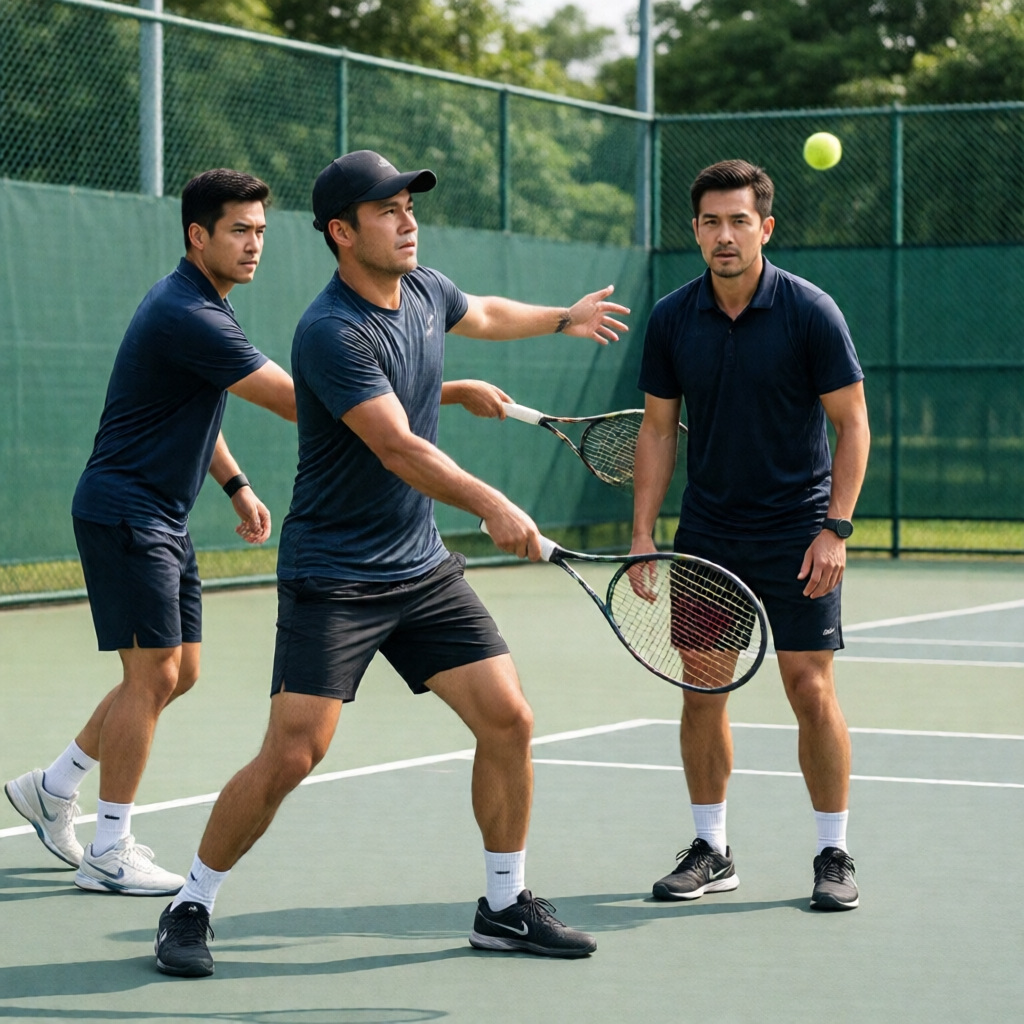
For many players, returning serve can feel difficult because the ball arrives faster than during a normal rally. There is less time to prepare, and even a small technical mistake can result in a weak return or an unforced error. Structured tennis lessons can help players develop the timing, positioning, preparation, and decision-making needed to return serves more consistently.
Table of Contents
- Why the Return of Serve Matters
- Understanding the Challenges of Returning Serve
- Improving Your Return Position
- Developing a Faster Racket Preparation
- Learning to Read the Serve
- Improving Timing and Contact
- Controlling the Direction of Your Return
- Building Confidence Through Tennis Lessons
- Common Return-of-Serve Mistakes
- Practising Returns Between Tennis Lessons
- Final Thoughts
1. Why the Return of Serve Matters
The serve gives the server an immediate advantage because the server controls when and where the ball enters play. A reliable return helps reduce that advantage.
You do not necessarily need to hit a powerful return to be effective. For many players, the first goal should be making a controlled return that lands deep enough to prevent the server from immediately attacking.
During tennis lessons, coaches can help players understand that a successful return can have different purposes. Depending on the opponent’s serve, you may want to return deep, direct the ball toward the weaker side, use height to create time, or simply prioritise getting the ball back into play.
2. Understanding the Challenges of Returning Serve
A serve can be faster, higher, wider, or more heavily spun than a typical rally ball. This creates several challenges.
You have less preparation time, which means large backswing movements can become difficult to control. You also need to react to the direction of the serve while maintaining balance and preparing for the next shot.
Players may also struggle because they are trying to do too much. Attempting to hit every return with maximum power can lead to poor contact and unnecessary errors.
A tennis coach can simplify the process by breaking the return into manageable elements such as ready position, split step, racket preparation, contact point, and recovery.
3. Improving Your Return Position
Your starting position has a major influence on your ability to return serve.
Standing too close to the baseline may leave you with very little reaction time against a fast serve. Standing too far behind the baseline, however, can give the server more control and allow the ball to push you further away from the court.
The appropriate position depends on your reaction speed, playing style, the opponent’s serve, and the type of court.
During tennis lessons, a coach can experiment with different return positions and observe how they affect your ability to make contact comfortably. You can then learn when moving forward, staying near the baseline, or giving yourself additional space makes sense.
4. Developing a Faster Racket Preparation
One of the biggest differences between a normal groundstroke and a return of serve is the amount of time available.
A return generally benefits from a compact preparation. Instead of taking a large backswing, players can focus on getting the racket into position quickly and using the incoming speed of the serve.
This does not mean the stroke has to become stiff or rushed. The objective is to create an efficient movement that allows you to prepare early and make controlled contact.
A tennis coach can use progressively faster feeds to help you develop this preparation without immediately putting you under the pressure of a full-speed serve.
5. Learning to Read the Serve
Returning serve is not only a physical skill. It is also a reading and anticipation skill.
Players need to observe clues from the server’s movement and racket contact while avoiding premature guesses. Over time, you may become better at recognising whether a serve is likely to travel toward your forehand, backhand, body, or a particular area of the service box.
Tennis lessons can introduce different types of serves so you learn to react rather than simply practise one predictable ball.
A coach can also vary placement and speed during return drills. This helps you develop the ability to make decisions under conditions that are closer to actual match play.
6. Improving Timing and Contact
Good timing is essential when returning serve.
Because the ball arrives quickly, players often contact the ball too late. Others may rush forward and hit before they are balanced.
Coaching can help identify the correct contact zone for your return and teach you to coordinate your split step, movement, racket preparation, and swing.
Repetition is particularly valuable here. A coach can feed serves at different speeds and locations, allowing you to gradually develop a more automatic response.
Over time, the goal is to reduce unnecessary movement and make the return feel more natural.
7. Controlling the Direction of Your Return
Once you can consistently make contact, the next step is learning where to place your return.
A return directed deep toward the middle can sometimes be a useful high-percentage option because it reduces the available angles for the server. Returns toward the server’s backhand may also be useful depending on the opponent.
However, players should avoid choosing targets simply because they look aggressive.
During tennis lessons, coaches can introduce simple return targets and teach players to balance placement with consistency. You can practise returning crosscourt, down the line, and toward the middle while learning when each option makes sense.
8. Building Confidence Through Tennis Lessons
Confidence on return games often comes from repetition.
Players who rarely practise against serves may become nervous when facing a strong server. They may stand too far back, swing too hard, or hesitate when the ball arrives.
Regular tennis lessons provide an opportunity to practise returns in a controlled environment.
A coach can gradually increase serve speed, vary placement, introduce different spins, and eventually create competitive return games. This progression allows players to become comfortable with faster incoming balls without being overwhelmed immediately.
As your reaction and preparation improve, returning serve can become a more manageable part of your overall game.
9. Common Return-of-Serve Mistakes
Several mistakes can make returning serve more difficult.
One common problem is using a backswing that is too large. Another is standing in a fixed position instead of adjusting according to the server.
Some players also try to hit winners from every return. While aggressive returns can be useful in certain situations, consistently attempting low-percentage shots can create unnecessary errors.
Other problems include failing to split step, contacting the ball too late, losing balance, and forgetting to recover after the return.
Tennis coaching can help identify which mistakes are affecting your particular game and provide focused exercises to address them.
10. Practising Returns Between Tennis Lessons
You do not need a full competitive match every time you practise your return.
If you have a training partner, start with controlled serves and focus on making clean contact. Gradually introduce different locations rather than immediately attempting maximum speed.
You can also practise your ready position, split-step timing, and compact racket preparation without hitting a ball. These movements can help reinforce the habits developed during tennis lessons.
When practising with a partner, set simple targets. For example, aim to make 10 consecutive returns into the court before increasing the serve speed or changing the target.
The objective is to build reliable patterns rather than simply hit the ball as hard as possible.
11. Final Thoughts
Improving your return of serve requires more than simply practising powerful swings. Positioning, anticipation, preparation, timing, balance, and shot selection all contribute to a reliable return.
Tennis lessons provide structured opportunities to develop these skills progressively. A coach can adjust the speed and placement of serves, identify technical problems, and introduce realistic return situations as your ability improves.
For players looking to become more complete tennis players, developing a dependable return of serve can make a significant difference. With consistent practice and appropriate coaching, the return can become a confident and reliable part of your game.