
Tennis court etiquette is often overlooked by beginners, but it is an essential part of becoming a respectful and well-liked player. In places like Singapore, where public and private courts are shared among many players, good etiquette ensures smooth gameplay, safety, and a positive environment for everyone.
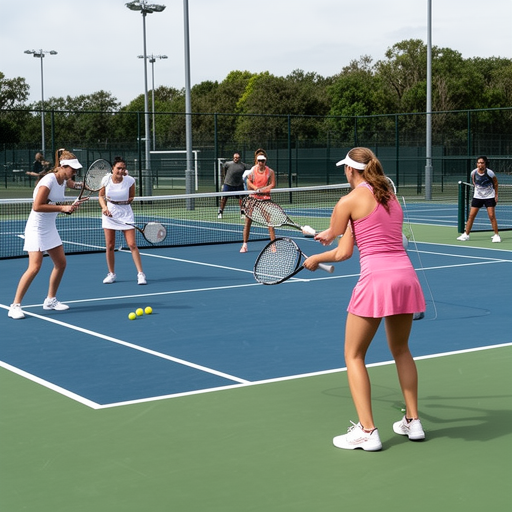
Whether you are new to the sport or currently taking tennis lessons, understanding court behavior will help you integrate faster into the tennis community and avoid common mistakes.
Table of Contents
- What Tennis Court Etiquette Means
- Booking and Court Usage Rules in Singapore
- Proper Behaviour Before a Match Starts
- On-Court Etiquette During Play
- Communication and Point Disputes
- Safety and Awareness on Shared Courts
- Respecting Time Limits and Other Players
- Dress Code and Equipment Expectations
- Common Beginner Mistakes to Avoid
- How Tennis Lessons Reinforce Proper Etiquette
- Final Thoughts
1. What Tennis Court Etiquette Means
Tennis court etiquette refers to the set of unwritten and written rules that guide respectful behaviour on and around the court. It includes how you interact with:
- Your opponent
- Your doubles partner
- Other players waiting for courts
- Coaches and spectators
Good etiquette ensures fairness, reduces conflicts, and maintains the quality of play for everyone.
In structured environments like tennis lessons, etiquette is often taught alongside technique because it is part of being a complete player.
2. Booking and Court Usage Rules in Singapore
In Singapore, tennis courts are often managed by public sports facilities, private clubs, or residential developments.
Common booking rules:
- Courts must be reserved in advance (especially public facilities)
- Players should arrive on time for their booking slot
- Exceeding time limits is not allowed
- Sharing courts respectfully during peak hours is expected
Many facilities also enforce strict timing, so being punctual is considered basic etiquette.
3. Proper Behaviour Before a Match Starts
Good etiquette begins before the first serve.
Expected behaviour:
- Greet your opponent politely
- Agree on warm-up time (usually 5–10 minutes)
- Clarify scoring format if needed
- Respect court boundaries and waiting players
Warm-ups should be efficient and fair, not overly long. Beginners often underestimate how important this stage is for setting the tone of the match.
4. On-Court Etiquette During Play
During a match, behaviour matters just as much as performance.
Key rules:
- Do not distract opponents during points
- Avoid unnecessary noise during rallies
- Wait for the point to finish before moving between courts
- Return stray balls promptly and safely
If a ball from another court enters your playing area, pause play immediately to avoid accidents.
Good behaviour ensures matches flow smoothly without unnecessary interruptions.
5. Communication and Point Disputes
Disagreements can happen, especially among beginners.
Proper handling of disputes:
- Remain calm and polite
- Discuss points respectfully, not emotionally
- Replay points if both sides are unsure
- Use clear communication in doubles situations
In social tennis environments, fairness is often prioritised over strict competition rules.
Coaches during tennis lessons often teach how to resolve disputes without conflict, especially in doubles training.
6. Safety and Awareness on Shared Courts
Safety is a major part of court etiquette.
Important safety rules:
- Never walk behind active courts during play
- Always check before crossing adjacent courts
- Pick up balls only when play is paused
- Avoid sudden movement near baseline areas
Awareness prevents accidents and ensures everyone can focus on their game.
7. Respecting Time Limits and Other Players
In busy facilities, time management is critical.
Best practices:
- Finish points promptly when time is ending
- Do not delay court exit after your session
- Allow the next group to enter immediately
- Avoid unnecessary long breaks between games
In Singapore, where court demand is high, respecting time slots is considered a core part of etiquette.
8. Dress Code and Equipment Expectations
While tennis does not require strict uniforms in all locations, proper attire is still expected.
Recommended standards:
- Sports attire suitable for movement
- Proper tennis shoes (non-marking soles for indoor courts)
- Avoid casual footwear or inappropriate clothing
- Bring your own equipment (rackets, balls if required)
Some clubs and academies have stricter dress codes, especially during structured tennis lessons.
9. Common Beginner Mistakes to Avoid
New players often make unintentional etiquette mistakes such as:
- Walking behind courts during rallies
- Not calling “out” clearly or fairly
- Taking too long between points
- Ignoring warm-up expectations
- Leaving balls scattered around the court
These mistakes are usually not intentional but can affect other players’ experience.
Being aware of them early helps you become a more confident and respectful player.
10. How Tennis Lessons Reinforce Proper Etiquette
Modern tennis lessons do not only focus on technique—they also teach court behaviour.
Coaches typically emphasize:
- Respect for opponents and partners
- Proper warm-up routines
- Communication during doubles play
- Safety awareness during drills
- Match discipline and structure
Learning etiquette in a structured environment helps beginners develop habits that carry into casual and competitive matches.
It also makes it easier to join social tennis groups and club play in the future.
11. Final Thoughts
Tennis court etiquette is a fundamental part of the sport that ensures fairness, safety, and enjoyment for everyone involved. In a busy tennis environment like Singapore, good behaviour is just as important as good technique.
By respecting time slots, communicating clearly, and being aware of others on court, you not only improve your own experience but also contribute positively to the tennis community.
For beginners, combining etiquette awareness with regular tennis lessons is the fastest way to become a confident, respected, and well-rounded player.