
Choosing between indoor and outdoor tennis training is an important decision for players in Singapore. Both environments offer unique advantages, and the “better” option depends on your goals, playing style, and how you structure your tennis lessons.
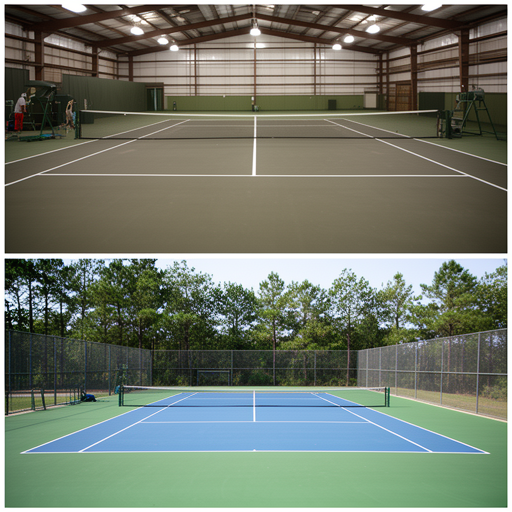
Singapore’s climate makes this comparison especially relevant because heat, humidity, and sudden rain can significantly affect training quality and consistency.
This guide breaks down the differences so you can make a smarter decision about where to train.
Table of Contents
- Overview of Tennis Training Environments in Singapore
- Benefits of Outdoor Tennis Training
- Challenges of Outdoor Play
- Benefits of Indoor Tennis Training
- Limitations of Indoor Courts
- Skill Development Differences (Indoor vs Outdoor)
- Physical and Mental Adaptation Factors
- Which Environment Is Better for Beginners?
- How Players Combine Both for Faster Improvement
- Role of Tennis Lessons in Training Environment Choice
- Final Thoughts
1. Overview of Tennis Training Environments in Singapore
In Singapore, players typically train in two main environments:
- Outdoor courts (public parks, clubs, residential courts)
- Indoor courts (covered facilities or air-conditioned venues)
Each environment affects:
- Ball speed and bounce
- Player endurance
- Visibility and comfort
- Consistency of training sessions
Because weather conditions can change quickly, many players switch between both depending on availability and goals.
2. Benefits of Outdoor Tennis Training
Outdoor courts are the most common training environment.
Key advantages:
- Real match conditions (wind, sun, humidity)
- Better adaptation to tournament environments
- More court availability in public facilities
- Natural lighting for visibility training
Outdoor training helps players develop real-world adaptability, which is crucial for competitive matches.
Many players taking tennis lessons start outdoors because it reflects actual playing conditions they will face in tournaments.
3. Challenges of Outdoor Play
Despite its benefits, outdoor training has limitations.
Common challenges:
- Heat and humidity affecting stamina
- Sudden rain interruptions
- Wind affecting ball trajectory
- Sun glare impacting visibility
- Inconsistent court scheduling due to weather
These factors can reduce training consistency if not managed properly.
4. Benefits of Indoor Tennis Training
Indoor courts offer controlled conditions that support focused skill development.
Key advantages:
- No weather disruptions
- Stable lighting and court conditions
- Better focus on technique without environmental distractions
- More consistent ball bounce and speed
- Reduced physical strain from heat
Indoor environments are especially useful for technical training and repetition-based drills.
5. Limitations of Indoor Courts
Indoor training also has drawbacks.
Limitations include:
- Limited availability and higher cost
- Less exposure to real match conditions
- No adaptation to wind or sun
- Less physical conditioning from heat exposure
Players who train only indoors may struggle when transitioning to outdoor competitive matches.
6. Skill Development Differences (Indoor vs Outdoor)
Each environment develops different aspects of your game.
Indoor training improves:
- Stroke consistency
- Technical precision
- Controlled shot execution
- Rally rhythm stability
Outdoor training improves:
- Adaptability to conditions
- Physical endurance
- Tactical decision-making under pressure
- Mental resilience in changing environments
A complete player benefits from both.
7. Physical and Mental Adaptation Factors
Training conditions also affect how your body and mind respond.
Outdoor:
- Builds stamina in hot conditions
- Improves mental toughness under discomfort
- Develops hydration and energy management skills
Indoor:
- Reduces fatigue for higher-quality repetition
- Improves focus on technical correction
- Allows longer practice sessions with less physical strain
Balancing both helps players become more well-rounded athletes.
8. Which Environment Is Better for Beginners?
For beginners, both environments have value, but they serve different purposes.
Recommended approach:
- Start with outdoor training for real-game familiarity
- Use indoor sessions for technical correction and repetition
- Avoid relying only on one environment
Beginners benefit most when they combine structured tennis lessons with exposure to both conditions.
9. How Players Combine Both for Faster Improvement
Advanced players often mix environments strategically.
Example training structure:
- Indoor session: technique-focused drills (serve, footwork, consistency)
- Outdoor session: match play and tactical training
- Fitness sessions outdoors for endurance adaptation
This hybrid approach ensures balanced development.
10. Role of Tennis Lessons in Training Environment Choice
Coaches play an important role in deciding where you should train.
In structured tennis lessons, tennis coaches:
- Adjust drills based on court conditions
- Teach how to adapt technique for wind and heat
- Use indoor courts for correction and outdoor courts for application
- Simulate match scenarios in different environments
- Help players avoid over-reliance on one training setting
In Singapore’s climate, this balance is especially important for consistent long-term improvement.
11. Final Thoughts
Both indoor and outdoor tennis training play an important role in player development. Indoor courts provide consistency and technical refinement, while outdoor courts build adaptability, endurance, and real-match experience.
Neither environment is superior on its own—the best results come from combining both strategically.
With structured tennis lessons and a balanced training approach, players can develop strong technical skills while also learning to perform effectively in real-world conditions.