
Table of Contents
- Introduction
- Why Court Location Matters for Tennis Lessons
- Types of Public Tennis Courts Used for Lessons in Singapore
- Condo Courts: A Popular Alternative for Private Coaching
- What Makes a Court Suitable for Tennis Lessons
- Outdoor vs Indoor Courts: What Singapore Players Should Know
- How to Pick a Court Based on Your Schedule
- How SimplyTennis Handles Court Locations
- Frequently Asked Questions
- Conclusion
Introduction
One of the most practical questions beginners ask before booking their first tennis lesson is where the lesson will actually take place. In Singapore, tennis coaching is not confined to a single facility. Sessions happen across a wide range of locations including public courts, condominium courts, and community club facilities spread across the island.
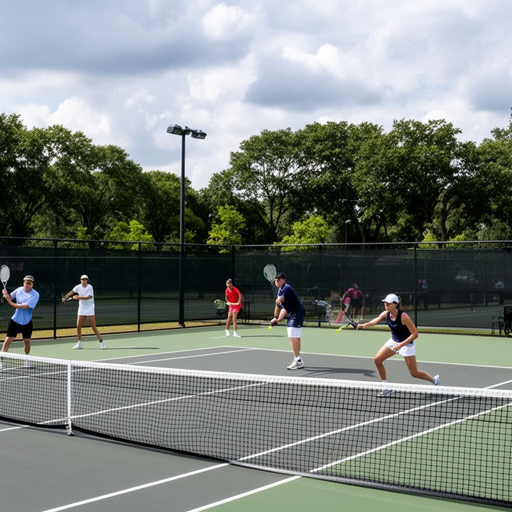
Choosing a court that is close to home, well-maintained, and suitable for learning can make a significant difference in how consistently you attend lessons and how quickly you improve. This guide covers the types of courts commonly used for tennis lessons in Singapore and what to look for when selecting one near you.
Why Court Location Matters for Tennis Lessons
Consistency is one of the most important factors in improving at tennis. Beginners who attend lessons regularly progress far faster than those who skip sessions due to inconvenient logistics.
When a court is located close to where you live or work, the barrier to showing up is much lower. This is especially true for children whose parents need to manage school schedules, and for working adults who have limited windows between work and family commitments.
Beyond convenience, the quality and environment of the court also affect the lesson itself. Courts that are too crowded reduce active hitting time. Courts with poor drainage become unusable after rain. Courts without adequate evening lighting limit scheduling flexibility. These factors matter more than most beginners initially realise.
Types of Public Tennis Courts Used for Lessons in Singapore
Singapore has a well-distributed network of public tennis courts managed by community organisations and sports authorities. Tennis coaches commonly use four main types.
The first is neighbourhood courts within Housing Development Board estates. These are the most accessible and affordable option, located within walking distance for many residents. They are well-suited for beginners who want to train close to home without dealing with travel.
The second is community club courts, which are managed by community sports clubs. These tend to be better maintained and occasionally offer booking through membership systems. They are popular for structured group lessons due to their consistency.
The third is park and recreational courts, found in larger green spaces across the island. These courts are often quieter during off-peak hours and are preferred by coaches conducting private lessons where fewer distractions support focused learning.
The fourth is courts at schools or sports institutions, which some coaching programs use during designated time slots. Access varies depending on the facility and coaching arrangement.
Each type offers a different training environment. Experienced coaches typically recommend courts based on the student’s location, level, and lesson format rather than following a one-size-fits-all approach.
Condo Courts: A Popular Alternative for Private Coaching
Beyond public courts, condominium courts have become one of the most popular settings for tennis lessons in Singapore. The convenience is unmatched. Lessons take place within or very close to home, eliminating the need to book or travel to an external facility.
SimplyTennis conducts private and group lessons at students’ own condominium courts or at partner condominiums in the Orchard Road area. This model suits families with children and busy adults particularly well because sessions can happen on a schedule that fits around existing routines without adding travel time.
For parents, condo-based coaching means being able to watch lessons from nearby without logistical complications. For adults, it means fitting a session in before or after work with minimal disruption.
What Makes a Court Suitable for Tennis Lessons
Not every available court is equally effective as a learning environment. When evaluating a court for lessons, there are several practical factors worth considering.
Surface quality is the starting point. Worn or cracked surfaces increase injury risk and affect ball bounce consistency, which makes it harder for beginners to develop reliable technique. A court with a smooth, consistent surface supports better skill-building from the earliest lessons.
Fencing ensures balls stay within the court, which matters more than it sounds during beginner sessions where a significant amount of time can be lost retrieving stray balls.
Lighting is essential for evening sessions. Singapore’s daytime heat makes evening slots the preferred training window for many students, particularly those attending lessons after work or school. Courts without adequate lighting severely restrict scheduling options.
Drainage is a uniquely important factor in Singapore’s tropical climate. Courts that take a long time to dry after rain will regularly interrupt or cancel sessions, which breaks training momentum.
Crowd levels also affect lesson quality. A quieter court means fewer interruptions, more focused coaching, and more efficient use of the lesson hour.
Outdoor vs Indoor Courts: What Singapore Players Should Know
The vast majority of tennis lessons in Singapore take place outdoors. Public and condo courts are almost entirely open-air facilities, which means heat and rain are real factors in daily training.
Outdoor lessons have clear advantages. They expose students to real playing conditions including wind, heat, and variable surfaces, which builds adaptability over time. They are also more accessible and easier to book across the island.
The main limitations are weather disruptions and heat intensity. Coaches typically schedule sessions in the early morning or evening to avoid peak sun hours. SimplyTennis has clear policies around rain: lessons cancelled with more than one hour’s notice before commencement due to weather will not be charged, while lessons interrupted after the first fifteen minutes still count as a full session.
Indoor courts provide a more controlled environment with consistent lighting and no weather interruptions. They are suited to players who need uninterrupted training or who are preparing for competitive play. However, indoor facilities in Singapore are less widely available and generally cost more per hour than outdoor options.
For most beginners, outdoor lessons at a well-located and well-maintained court are the most practical and effective starting point.
How to Pick a Court Based on Your Schedule
The best court for your lessons is the one you can reach consistently without friction. A premium facility thirty minutes away will serve you less well than a decent court five minutes from home if the travel becomes a reason to skip sessions.
For morning sessions, quieter neighbourhood and park courts work well as they tend to be less busy before working hours. For evening sessions, courts with good lighting and reliable bookings matter most. Weekend mornings are typically the busiest slots across all court types, so early planning is advisable for those sessions.
If you live in a condominium with a tennis court, starting there is usually the simplest option. If not, a coach who can identify the nearest suitable court to your location is a practical advantage.
How SimplyTennis Handles Court Locations
SimplyTennis coaches travel to a location that is convenient for the student. For private lessons, this means your own condominium court if available, or one of their partner condominiums in the Orchard Road area. This arrangement removes the need for students to source and book a court independently when starting out.
Court fees, if applicable, are not included in the lesson price and are handled separately by the student. SimplyTennis coaches provide all tennis balls. Students only need to bring their own racket, and advice on racket selection is available if needed.
Frequently Asked Questions
Do I need to book the court myself before my tennis lesson?
Yes. For private lessons at your own condo or another facility, you will need to make your own court booking once a coach has been assigned to you. SimplyTennis will guide you through this process.
Can lessons be held at public tennis courts?
Coaches at SimplyTennis work primarily from condo courts. If you have a specific public court preference, it is worth discussing with the team when enquiring.
What happens if it rains during a lesson?
If rain stops the session before fifteen minutes have passed, a rescheduling arrangement may be made. If fifteen minutes or more of the lesson have been completed, the full session fee applies. Lessons cancelled with at least one hour’s notice before commencement due to weather are not charged.
Conclusion
Finding the right court for your tennis lessons in Singapore is less about picking the most impressive facility and more about choosing a location you can reach and use consistently. Whether that is a condo court near your home, a neighbourhood public court, or a community club facility, the quality of the coaching and the regularity of your attendance matter far more than the venue itself.
SimplyTennis offers flexible location arrangements that bring coaching to where you are, making it easier to start and stay consistent from the very first lesson. To enquire about availability near you, visit simplytennis.sg.