
Table of Contents
- Introduction
- Why Choosing the Right Coach Matters More Than Proximity
- Coaching Credentials and Qualifications
- Teaching Experience vs Playing Experience
- Teaching Style and Communication
- Structured Lessons vs Random Drills
- Private vs Group: Matching the Format to Your Goals
- How to Use a Trial Lesson to Evaluate a Coach
- Red Flags to Watch Out For
- How Pricing Reflects Coaching Value
- Matching a Coach to Your Learning Goals
- What SimplyTennis Looks for in a Coach
- Conclusion
Introduction
When most people in Singapore start looking for tennis lessons, the first search they run is something like “tennis lessons near me.” Proximity is a practical starting point, but it is rarely the factor that determines how much you actually improve. The coach standing across the net from you matters far more than how far they travelled to get there.
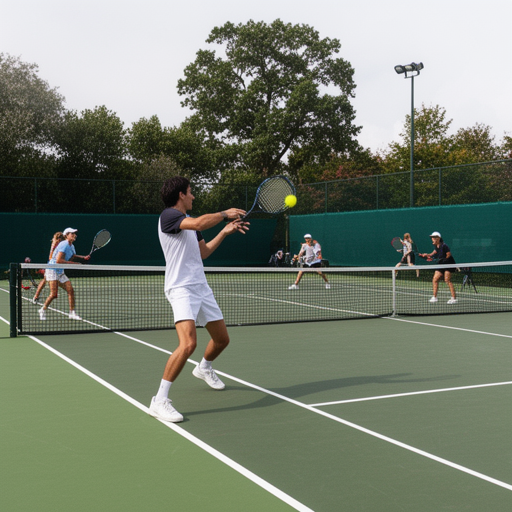
Choosing the right tennis coach involves evaluating several things that are easy to overlook when you are new to the sport: teaching credentials, lesson structure, communication style, and whether their approach genuinely matches your goals. This guide walks through what to look for, what to avoid, and how to make a confident decision before committing to a coaching program.
Why Choosing the Right Coach Matters More Than Proximity
Singapore is compact and well-connected, which means most coaches travel to multiple locations rather than operating from a single fixed facility. Distance to your home or condo is rarely the limiting factor. What matters much more is whether a coach shows up consistently, communicates clearly, plans sessions properly, and helps you improve in a measurable way over time.
Consistency in attendance drives improvement in tennis more than almost anything else. A coach who conducts sessions near your home increases the likelihood that you will keep to a regular schedule, but a nearby coach who delivers poor instruction will leave you with the same limited skill set month after month. Prioritise quality first, then convenience.
Coaching Credentials and Qualifications
Formal qualifications are a useful baseline when assessing a tennis coach. In Singapore, coaches accredited by the Singapore Tennis Association or internationally recognised bodies such as the International Tennis Federation have completed structured training in how to teach the sport, not just how to play it.
That said, certifications alone do not paint a complete picture. What matters equally is how a coach applies their knowledge in an actual lesson. A certified coach who delivers disorganised sessions without clear goals is less effective than an experienced coach who has spent years developing practical teaching skills with students of different ages and levels.
When enquiring about a coach, it is reasonable to ask about their background, how long they have been coaching, and what types of students they have worked with. A coach confident in their experience will have no difficulty answering these questions.
Teaching Experience vs Playing Experience
A common misconception among new players is that a coach who played at a high competitive level will automatically be a great teacher. This assumption often leads to disappointment. Playing ability and teaching ability draw on very different skill sets.
A coach who excelled as a player has deep instinctive knowledge of the sport, but that instinct can actually make it harder to break down technique into steps a beginner can follow. The best coaches understand how to translate complex movements into simple, repeatable actions and how to sequence those actions so a student can build on each lesson progressively.
The coaches who tend to develop students fastest are those who combine both: a solid playing background that gives them technical credibility, and genuine teaching experience that allows them to communicate effectively with players at the beginner and intermediate stage.
Teaching Style and Communication
Every coach has a distinct style, and finding one that matches how you learn is important. Some coaches are highly technical and focus on detailed biomechanical correction. Others take a more rally-based approach, letting students build feel through repetition with feedback layered in. Neither approach is inherently superior — it depends on the student.
For beginners, patience and clarity are the most important qualities. A coach who explains things in plain language, demonstrates movements clearly, and gives feedback without overloading the student with too much information at once will build your confidence far faster than one who expects you to grasp complex theory from day one.
Pay attention during an early session to how much active feedback you receive. Good coaching is not just feeding balls across the net. It involves watching, correcting, encouraging, and adjusting the session in real time based on what you are doing well and where you are struggling.
Structured Lessons vs Random Drills
One of the clearest indicators of coaching quality is whether lessons have structure. A good coach arrives with a clear plan for each session: what will be covered, in what order, and how it connects to what was practised in the previous lesson.
Random drills, where a coach feeds balls without a clear theme or progression, may feel like activity but rarely produce meaningful improvement. Students benefit most when each session has a specific focus, such as footwork, racket preparation, or serve mechanics, and when that focus builds systematically over several weeks.
SimplyTennis structures lessons around individual development, placing students in programs designed to challenge them progressively as they move through different levels. This kind of structured approach is what separates coaching that produces results from coaching that simply passes time on a court.
Private vs Group: Matching the Format to Your Goals
The format of your lessons shapes how quickly you develop and what kind of tennis experience you have.
Private lessons are the fastest path to technical improvement. With one coach focused entirely on one student, corrections happen immediately and the session is tailored to your specific weaknesses. Adults who want to improve quickly or who feel self-conscious learning around others typically find private lessons more productive, especially in the early stages.
Group lessons offer a different kind of value. SimplyTennis keeps group sizes small, with up to three participants per coach, which means the personal attention is closer to a semi-private session than a large class. The social element also helps students learn to adapt to different playing styles and builds enjoyment through friendly competition and shared progress.
Many players begin with private lessons to establish solid fundamentals, then incorporate group sessions once they are comfortable enough to practise with others at a similar level.
How to Use a Trial Lesson to Evaluate a Coach
A trial lesson is one of the most useful tools for evaluating whether a coach is the right fit. It gives you direct experience of their communication style, session structure, and ability to read your level before you commit to a longer program.
During the trial, notice whether the coach is observing you actively or standing passively. Are corrections explained clearly? Does the session feel planned or improvised? Do you leave with a sense of what you worked on and what comes next? These are the markers of a coach who takes their teaching seriously.
A trial that feels vague, rushed, or unfocused is a fair reflection of what regular sessions will look like. Trust that early impression.
Red Flags to Watch Out For
Several warning signs are worth watching for when evaluating a tennis coach.
Unstructured lessons with no clear theme or progression are the most common issue. If each session feels disconnected from the last, skill development will stall.
Poor communication is another red flag. A coach who cannot explain what you are doing wrong, or who gives overly technical feedback that a beginner cannot act on, is not suited to teaching at the foundational level.
Inconsistent punctuality or unreliable scheduling affects training continuity. Tennis improvement relies on regular sessions, and a coach who frequently reschedules or arrives late disrupts the rhythm that drives progress.
Pushing students into advanced drills before fundamentals are established is also a concern. Overtraining without proper progression increases injury risk and leads to frustration.
How Pricing Reflects Coaching Value
Price is not a reliable proxy for quality, but it does provide context. Coaches charging significantly below market rates may lack the experience or qualifications that justify higher fees. Coaches charging premium rates should be able to demonstrate structured programs, clear communication, and a track record of student improvement.
The most useful question to ask is not “is this coach cheap?” or “is this coach expensive?” but rather “does this coach consistently help students improve?” Value in tennis coaching is measured in progress over time, not cost per session.
Matching a Coach to Your Learning Goals
A coach suited to a child who wants to learn the basics is not necessarily the right choice for a working adult who wants to get fit through tennis, or for someone training toward their first competitive match. Goals shape what effective coaching looks like.
If your aim is recreational enjoyment and basic fitness, a relaxed and encouraging coaching style works well. If you want structured technical development and faster improvement, a coach with a clear progression plan and disciplined approach will serve you better. Be honest about your goals when enquiring, and a good coach will tell you directly whether their program is the right fit.
What SimplyTennis Looks for in a Coach
SimplyTennis focuses on developing players across all ages and levels, from children as young as four through to adults with no prior experience. Coaches are expected to plan structured lessons, provide consistent feedback, and create a positive learning environment that balances technical development with genuine enjoyment of the sport.
The primary focus at SimplyTennis is not just tennis skill, but helping players develop personal values, habits, and confidence that extend beyond the court.
Conclusion
The search for tennis lessons near you is the starting point, not the finish line. Once you have a list of options, the real work is evaluating the quality of the coaching, the structure of the lessons, and whether the coach’s style suits how you learn.
Look for credentials combined with genuine teaching experience, structured sessions with clear progression, patient and clear communication, and a format that matches your goals. Watch for red flags early. Use a trial lesson to confirm your instinct. And remember that the right coach does not just teach you tennis — they give you the foundation to keep improving long after the lesson ends.
To explore coaching programs at SimplyTennis, visit simplytennis.sg.