
Table of Contents
- Introduction
- Why Tennis Is One of the Best Sports for Children
- What Age Should Kids Start Tennis Lessons?
- What Actually Happens During Kids Tennis Lessons
- How Coaches Teach Young Beginners Differently
- Private vs Group Tennis Lessons for Children
- Physical and Mental Benefits of Tennis for Kids
- What Parents Need to Prepare
- How Long Does It Take Kids to Improve?
- Balancing Tennis with School in Singapore
- How SimplyTennis Structures Kids Lessons
- How Parents Can Best Support Their Child
- Conclusion
Introduction
Tennis is one of the fastest-growing sports among children in Singapore. Parents are increasingly drawn to it because it develops more than athletic ability. A child who trains consistently in tennis builds coordination, focus, resilience, and confidence in ways that few other sports replicate at a young age.
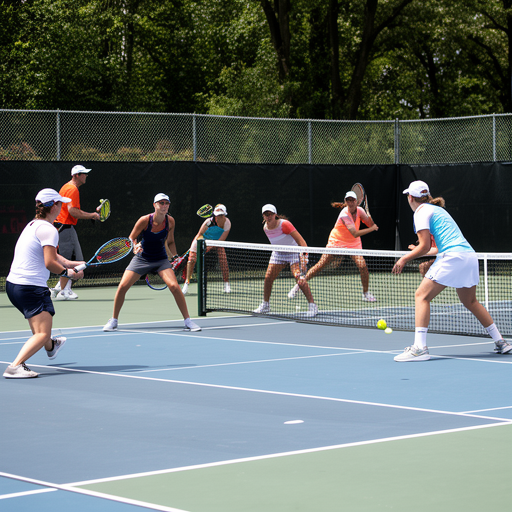
For parents who are considering kids tennis lessons for the first time, the most common questions are straightforward: What age should my child start? What will they actually learn? How do I know if the program is right for them? This guide answers each of those questions with information grounded in how SimplyTennis approaches coaching for children in Singapore.
Why Tennis Is One of the Best Sports for Children
Tennis develops a wide range of physical and cognitive skills simultaneously, which makes it particularly valuable during childhood development. Every session requires hand-eye coordination, agility, balance, and reaction speed. Over time, these physical foundations support performance across other sports and general athletic ability.
Beyond the physical, tennis teaches children how to manage mistakes constructively. A missed shot cannot be blamed on a teammate. That individual accountability, handled in a positive coaching environment, builds problem-solving ability, emotional regulation, and patience. These are qualities that consistently translate into better focus and discipline in academic settings as well.
Tennis also scales naturally with a child’s development. A four-year-old and a twelve-year-old both benefit from the sport, but the curriculum, equipment, and expectations are entirely different. A well-structured program adjusts to the child rather than expecting the child to adjust to a fixed syllabus.
What Age Should Kids Start Tennis Lessons?
This is the question most parents ask first. The short answer is that children can begin structured tennis lessons from around four years old, provided the program uses age-appropriate methods and modified equipment.
SimplyTennis accepts children in two age groups: four to nine years old and ten to fifteen years old. These brackets reflect the significant differences in physical coordination, attention span, and emotional readiness that exist between younger and older children. Lessons are structured accordingly, not simply scaled down versions of adult coaching.
For children under six, the priority is movement, coordination, and developing a positive relationship with the sport. Technical stroke correction is not the focus at this stage. For children aged seven and above, lessons can begin incorporating more structured stroke mechanics and basic game concepts.
Starting earlier is generally better than starting later, not because children who begin at eight or ten are disadvantaged, but because early exposure builds motor habits and a comfort with the sport that gives later learning a stronger foundation. That said, children who begin at any age within the four to fifteen bracket can develop strong skills with the right coaching and consistent practice.
What Actually Happens During Kids Tennis Lessons
Many parents are curious about what their child will spend an hour doing on court. The structure of kids tennis lessons looks quite different from adult coaching, and for good reason.
Young beginners typically start each session with movement-based warm-ups: running drills, balance exercises, reaction games, and simple footwork activities. These are not fillers. They build the physical foundation that tennis technique depends on.
The main session introduces tennis fundamentals progressively. In early lessons, this usually means forehand swings, basic ball tracking, and racket handling. Coaches use games and target-based drills to keep young players engaged and to make skill-building feel like play rather than instruction.
At SimplyTennis, kids group lessons use modified equipment: lower nets, softer age-appropriate tennis balls, and lighter rackets. These adaptations make it possible for younger children to develop proper mechanics without the frustration of equipment that is too heavy or bounces too unpredictably for their coordination level.
As children progress through different levels, lessons evolve from cooperative fundamentals toward basic match play and scoring. The shift from learning-to-play to playing-to-learn happens gradually as confidence and skill develop.
How Coaches Teach Young Beginners Differently
A common mistake among parents new to junior coaching is assuming that a good adult coach is automatically a good kids coach. The skills are genuinely different.
Children cannot process the same volume of technical instruction that adults can. A coach who delivers detailed mechanical explanations will lose a young player’s attention quickly and produce frustration rather than improvement. Effective junior coaches simplify instruction into one or two clear focus points per session, demonstrate rather than lecture, and use games and positive reinforcement to create an environment where trying and making mistakes feels safe.
Patience is non-negotiable. Children learning tennis will make the same mistake many times before it corrects. A coach who shows visible frustration with this process will damage the child’s confidence and enjoyment far faster than any technical error would. SimplyTennis coaches are selected with children’s development specifically in mind, prioritising the ability to create enjoyable and encouraging sessions that keep young players motivated over months and years.
Private vs Group Tennis Lessons for Children
Both formats work well for children and each has distinct advantages.
Private lessons provide individual attention and allow the coach to focus entirely on a single child’s development. This is particularly useful when a child has a specific technical issue to address, when they need more personalised pacing, or when scheduling flexibility is important to the family. Private kids lessons at SimplyTennis are highly personalised, with structured lesson plans tailored to each child’s areas of improvement.
Group lessons offer a different kind of value. Children learn alongside peers of similar age and level, which introduces a social and competitive dimension that is genuinely motivating. Learning to win and lose alongside others, problem-solve in a group setting, and support teammates builds social maturity alongside tennis skill. SimplyTennis keeps kids group sizes at three participants per coach, which means each child still receives meaningful individual feedback within the session.
Many families start with group lessons, then introduce private coaching as a child’s commitment to the sport grows or when specific technical development becomes the priority.
Physical and Mental Benefits of Tennis for Kids
The physical benefits of consistent tennis training for children are well established. Regular sessions improve cardiovascular fitness, agility, flexibility, muscular development, and balance. Because tennis involves continuous movement with frequent directional changes, children build athletic foundations that support performance across other sports as well.
The mental benefits are equally significant and often less anticipated by parents. Children who play tennis regularly develop greater focus, emotional control, and resilience. Managing the frustration of a missed shot, staying composed under match pressure, and continuing to try after setbacks are all skills built on the court that carry directly into academic and social environments.
Group lessons add a social dimension. Children develop communication, teamwork, and the ability to interact positively with peers in a competitive but collaborative setting. These are developmental outcomes that a structured tennis program delivers naturally through the format of the sport itself.
What Parents Need to Prepare
Starting kids tennis lessons at SimplyTennis requires minimal preparation. Tennis balls are provided by the coach. Rackets can be provided upon request, though children are encouraged to bring their own if they have one. Coaches can advise on appropriate racket selection if parents are unsure.
Children should wear comfortable sports attire and proper court shoes. Closed-toe shoes with lateral support are important on a tennis court. Flat-soled shoes or running shoes without court traction increase the risk of slipping and do not provide adequate support for the lateral movement the sport requires.
A water bottle is essential, particularly for outdoor sessions in Singapore’s climate. Parents attending condo-based lessons can remain nearby without disrupting the session. A relaxed parental presence is generally fine; hovering close to the court or calling out instructions during the session can distract the child and the coach.
How Long Does It Take Kids to Improve?
There is no single answer because improvement pace depends on training frequency, the child’s age, their natural coordination level, and the consistency of their attendance. A child who attends one lesson per week will develop more slowly than one who attends twice weekly and also practices informally between sessions.
As a general reference point, most children show visible improvement in coordination and basic stroke consistency after several weeks of regular lessons. A child who trains consistently once or twice a week over three to four months will typically be able to sustain basic rallies and understand elementary match play.
Parents should anchor expectations in enjoyment and long-term participation rather than short-term results. Children who enjoy their lessons continue. Children who feel pressure to perform quickly or who experience coaching that is not suited to their age often disengage. Sustained enjoyment is the most reliable predictor of long-term tennis development.
Balancing Tennis with School in Singapore
Many Singaporean parents worry that adding tennis lessons to an already full schedule will create academic pressure. In practice, regular structured sport tends to support rather than undermine academic performance in children.
Tennis builds focus, time management, and stress management skills that benefit classroom performance. Physical activity also improves sleep quality and mental clarity, both of which support learning. The discipline required to attend lessons consistently, prepare properly, and practice between sessions reinforces habits that transfer directly to academic work.
One to two sessions per week is manageable for most children alongside school commitments. SimplyTennis offers flexible scheduling including weekday and weekend options to work around school timetables.
How SimplyTennis Structures Kids Lessons
SimplyTennis offers both private and group tennis lessons for children across the four to nine and ten to fifteen age brackets. Lessons take place at the student’s own condominium court or at partner condominiums in the Orchard Road area. All tennis balls are provided.
Group lessons use modified equipment appropriate to each age group and keep class sizes to a maximum of three children per coach. Private lessons are individually structured around each child’s development needs and scheduled around family convenience.
Payment is required at least three days before the first lesson and covers a minimum of four sessions in advance. The four-session bundle must be completed within five weeks of sign-up. Cancellations require at least twenty-four hours notice to avoid forfeiting the session fee.
How Parents Can Best Support Their Child
Parental support is one of the most significant factors in whether a child stays engaged with tennis long term. The most effective support is also the simplest: praise effort rather than outcome, maintain consistent attendance, and avoid adding pressure around performance.
Children who feel that their parents are genuinely interested in the sport — not just the results — tend to develop a healthier and more durable relationship with it. Watching occasionally, asking about what was practised rather than whether they won, and arranging practice time between lessons all reinforce positive habits without creating anxiety.
Avoid coaching from the sideline during sessions. Children perform better and learn faster when they are responding to one clear voice, their coach’s. Conflicting instructions, even well-intentioned ones, create confusion and slow development.
Conclusion
Kids tennis lessons in Singapore offer a structured, enjoyable, and developmentally rich experience for children from four years old upward. The right program builds physical fitness, coordination, focus, confidence, and resilience in ways that extend well beyond the tennis court.
Whether your child is starting at four or fourteen, the most important factors are a coach who understands how to work with children, a lesson format that matches your child’s learning style, and consistent attendance over time. SimplyTennis provides both private and group junior programs across Singapore, with lessons designed to develop young players at every stage.
To enquire about kids tennis lessons or to book a first session, visit simplytennis.sg.