
Table of Contents
- Introduction
- Why Frequency Matters More Than Total Hours
- The Minimum Effective Training Frequency
- How Many Lessons to Reach Basic Rally Ability
- How Many Lessons to Play a Proper Match
- Training Schedules for Different Commitment Levels
- Private vs Group Lessons: How Format Affects Progress
- What Happens If You Train Too Infrequently
- Supplementing Lessons with Self-Practice
- Signs You Are Ready to Increase Training Frequency
- What SimplyTennis Recommends for Beginners
- Conclusion
Introduction
One of the first questions anyone asks before signing up for tennis lessons is how many sessions it will actually take to reach a level where they can play comfortably. It is a practical question that deserves a direct answer, and the honest response is that it depends on two things above all else: how often you train and how consistently you show up.
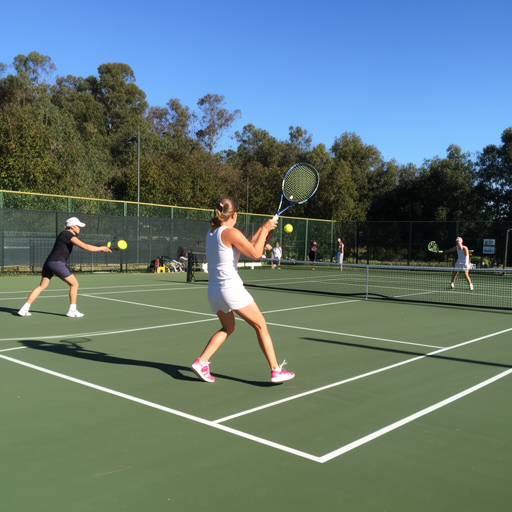
This guide explains the number of lessons most beginners in Singapore need to reach recognisable milestones, what training frequency delivers the best results, and how to structure a realistic schedule that produces steady improvement without burning out in the first month.
Why Frequency Matters More Than Total Hours
Tennis is a skill-based sport, which means improvement comes from building muscle memory through repetition over time. It is not the kind of sport where ten hours of intense training in a single week produces the same results as ten hours spread across five weeks. The body and brain need time between sessions to consolidate what was practised, and regular repetition reinforces correct movement patterns before incorrect ones have a chance to take hold.
This is why a beginner who trains once a week for three months will generally outperform a beginner who trained every day for two weeks and then stopped for six weeks. Consistency across time is the mechanism of improvement in tennis. Total hours matter far less than the regularity with which those hours are scheduled.
The Minimum Effective Training Frequency
One lesson per week is the minimum training frequency that produces genuine and progressive improvement for a beginner. Below this threshold, the gap between sessions is long enough that technique and coordination skills regress noticeably, and each lesson ends up partly revisiting ground already covered rather than building on it.
SimplyTennis notes that if you are a beginner or intermediate player, three lessons per week or more is ideal in order to see meaningful progress and improvement. For those who cannot commit to three sessions, two sessions per week represents a strong balance between progress speed and scheduling practicality. One session per week is sufficient for steady improvement, particularly for adult beginners with busy professional schedules, but it requires accepting that the timeline to comfortable play will be longer.
How Many Lessons to Reach Basic Rally Ability
Basic rally ability — the point where you can sustain a back-and-forth exchange from the baseline with reasonable consistency — is the first meaningful milestone for most beginners. It is also the level at which tennis starts to become genuinely enjoyable, because rallying with another player is far more satisfying than struggling to make contact with the ball.
The number of lessons required to reach this point varies by individual, but the following estimates apply to most adult beginners with no prior racket sport experience:
At one lesson per week, most beginners develop basic rally consistency within two to three months, which is roughly eight to twelve sessions.
At two lessons per week, that same milestone is typically reached within four to six weeks, covering the same eight to twelve sessions but in compressed time with less regression between sessions.
At three lessons per week, confident basic rallying is usually achievable within five to eight weeks.
SimplyTennis confirms that most beginner students are able to play after two months, assuming consistent once-weekly attendance or more. The more frequent the training, the faster that two-month milestone is reached.
How Many Lessons to Play a Proper Match
Playing a proper game with correct scoring, serving, and rally-based points is a more advanced milestone than basic rallying. Most beginners can expect to start understanding and enjoying basic match play within three to six months of consistent weekly training.
This milestone requires not just stroke mechanics and coordination, but also familiarity with basic rules, scoring, positioning, and simple tactical awareness. These elements layer in gradually over weeks of coached sessions and improve considerably faster when a student has opportunities to practice informally between lessons, even casually hitting with a friend.
The tennis scoring system — 15, 30, 40, deuce, game, set, match — is straightforward to learn but takes real match experience to apply without thinking. Coaches typically introduce basic game play once a student’s stroke mechanics are reliable enough to sustain points.
Training Schedules for Different Commitment Levels
Different commitment levels produce different improvement timelines. Understanding this clearly helps beginners set realistic expectations from the start.
For casual beginners attending one group or private session per week, the focus in early lessons is basic rallying, grip, and coordination. Progress is slow but steady. This schedule suits recreational players and busy working adults who want to improve without restructuring their weekly routine.
For more committed beginners attending two sessions per week, one private lesson combined with one group session or two structured private lessons produces noticeably faster progress. Technical correction happens more frequently, and the shorter gap between sessions means coordination improvements do not regress as much. Solid beginner foundations typically develop within six to ten weeks on this schedule.
For beginners pursuing rapid improvement with three sessions per week, combining two lessons with one self-directed practice session produces a strong foundation within five to eight weeks. This schedule suits players with specific goals such as wanting to play socially within a fixed timeframe, or parents who want their child to reach a comfortable level before a school or club activity.
Private vs Group Lessons: How Format Affects Progress
The format of lessons influences not just cost but the pace and type of improvement.
Private lessons produce faster technical correction because the coach observes and adjusts one player continuously throughout the session. For beginners, early technical habits are critical. Incorrect grip, poor swing mechanics, and footwork errors that go uncorrected in early sessions become increasingly difficult to change later. Private lessons minimise this risk because the coach catches and corrects mistakes in real time without the attention being divided across multiple students.
SimplyTennis private lessons for adults are customised to individual goals and paced to the student’s level. Coaches travel to a convenient location, and sessions can be arranged around work schedules on weekday mornings, evenings, or weekends.
Group lessons provide a different value. With a maximum of three participants per coach at SimplyTennis, group sessions maintain a level of individual attention that is much closer to semi-private coaching than a typical large class. The social element of group training also introduces beginners to adapting to different playing styles, which builds match readiness that purely solo drilling cannot replicate.
Many beginners find that combining occasional private sessions with regular group attendance delivers the best overall development: private lessons to address specific technical issues, group lessons for rally experience and enjoyment.
What Happens If You Train Too Infrequently
Training once every two to three weeks or less produces very limited improvement for most beginners. The gaps between sessions are long enough that muscle memory degrades noticeably, grip comfort fades, and coordination that felt more natural at the end of one session has to be partially rebuilt at the start of the next.
In practical terms, training this infrequently means that a meaningful portion of each lesson is spent regaining ground rather than covering new material. Progress becomes frustratingly slow, which often leads beginners to conclude that they are simply not suited to tennis rather than recognising that frequency, not ability, is the limiting factor.
The solution is not necessarily more lessons per week if time is the constraint. Even maintaining a reliable once-weekly schedule, with no long breaks, produces far better results than alternating periods of intensive training with extended gaps.
Supplementing Lessons with Self-Practice
Lessons are the foundation of improvement, but independent practice between sessions accelerates the process significantly. Even twenty to thirty minutes of additional practice per week makes a measurable difference to how quickly beginner skills consolidate.
Wall practice is one of the most effective options for independent training in Singapore. Hitting against a solid wall develops timing, racket control, and consistency without needing a partner or court booking. The ball returns at a predictable pace, which allows beginners to focus on mechanics rather than movement and recovery.
Shadow swings at home, where a player rehearses the motion of a forehand or backhand without a ball, reinforce the muscle memory built during lessons. Footwork drills in any open space — split steps, lateral movements, quick recovery steps — build the movement foundation that makes stroke execution easier on court.
Casual hitting with a friend or family member between lessons also counts as useful practice, even if neither player has advanced skills. The act of tracking the ball, timing contact, and adjusting movement to a live game situation all reinforce lesson content in ways that drills alone cannot fully replicate.
Signs You Are Ready to Increase Training Frequency
Several indicators suggest that a beginner is ready to move from one session to two sessions per week, or from two to three.
The clearest sign is that the beginning of each new lesson no longer feels like relearning. If a player can pick up approximately where the previous session ended without significant regression, their body is consolidating skills effectively between sessions. Adding another session per week at this point will accelerate that process rather than overload it.
Another indicator is a consistent desire to practice between lessons. When a beginner finds themselves looking for walls to hit against or wishing they had more court time, that motivation is a strong signal that they are ready for increased training volume.
Persistent frustration with slow progress, combined with good attendance and genuine effort in lessons, is also a sign that frequency rather than effort is the limiting factor.
What SimplyTennis Recommends for Beginners
SimplyTennis recommends that beginners commit to at least once-weekly lessons to begin, with the goal of increasing to twice weekly when schedule allows. Payment is structured around a minimum of four sessions booked in advance, which must be completed within five weeks of sign-up. This structure encourages the consistency that produces real improvement.
For beginners or intermediate players who want to see the fastest possible progress, three or more sessions per week is the recommended target. This applies to both children and adults, with children typically benefiting more from increased frequency due to the role of repetition in building coordination during developmental years.
Coaches at SimplyTennis work with students on weekday mornings and evenings as well as weekends, with flexible scheduling for private sessions that travel to the student’s location.
Conclusion
A complete beginner in Singapore needs roughly eight to twelve sessions to reach basic rally ability, and three to six months of consistent weekly training to play a comfortable basic match. The exact timeline depends on how frequently lessons are attended, whether private or group format is used, and how much self-practice happens between sessions.
The clearest advice is to start with at least one lesson per week and maintain that schedule without significant interruption. Add a second session per week when time allows. Supplement with informal practice when possible. And focus on consistency over intensity — the beginner who trains reliably once per week for six months will outperform the one who trains intensively for a month and then stops.
To get started with a structured beginner program in Singapore, visit simplytennis.sg.