
A good tennis lesson is more than simply hitting balls back and forth for an hour. Professional tennis coaches usually structure lessons around specific objectives so that every part of the session contributes to the player’s development.
For beginners, this may mean learning basic technique and ball control. For intermediate players, the focus may shift toward consistency, movement, shot selection, and point construction. Understanding how a one-hour tennis lesson is structured can help players know what to expect and get more value from every session.
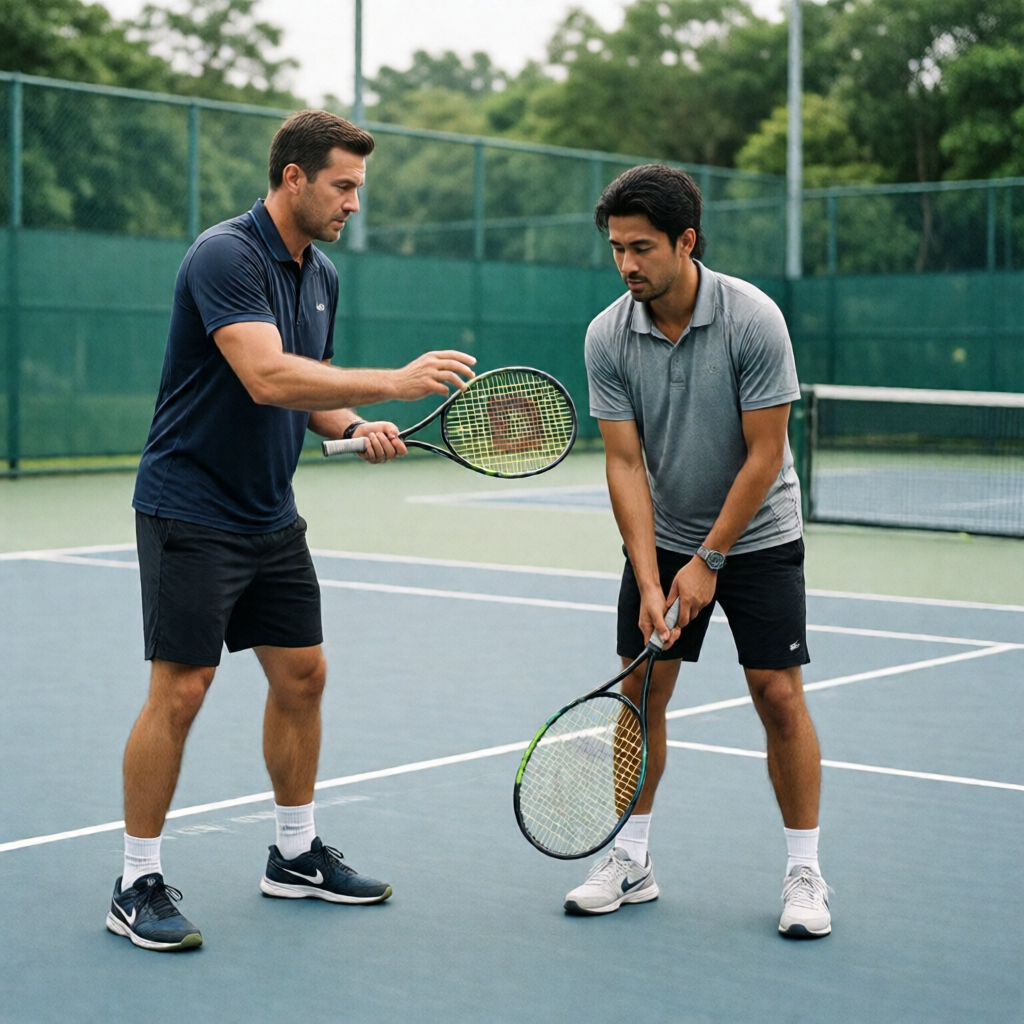
Table of Contents
- Why Tennis Lesson Structure Matters
- The Warm-Up and Preparation
- Technical Assessment
- Stroke Development and Drills
- Movement and Footwork Training
- Applying Skills Through Rallying
- Point-Based and Match Situations
- Coach Feedback and Corrections
- Setting Goals for the Next Lesson
- How Players Can Get More From a One-Hour Lesson
- Final Thoughts
Why Tennis Lesson Structure Matters
A structured tennis lesson allows the coach to balance technique, movement, consistency, and practical play.
Without a clear structure, a player may spend too much time hitting the same type of shot without understanding how that skill applies during an actual match. A well-planned lesson gradually moves from preparation and technical work toward more realistic tennis situations.
The exact structure varies according to the player’s age, experience, fitness level, goals, and current weaknesses. A beginner may require more technical instruction, while an experienced recreational player may spend more time on tactics and point play.
The important factor is that the lesson has a purpose.
The Warm-Up and Preparation
The first part of a tennis lesson usually prepares the player physically and mentally.
A coach may begin with light movement, dynamic exercises, or simple racket activities. The goal is to get the body moving before higher-intensity tennis begins.
Players may then start with easy groundstrokes. This gives both the player and coach an opportunity to assess how the player is moving and hitting that day.
The warm-up can also reveal issues that were not obvious during the previous lesson. For example, a player may be struggling with timing, arriving late to the ball, or making inconsistent contact.
Instead of immediately increasing the difficulty, the coach can use the warm-up to determine what should receive attention during the session.
Technical Assessment
Once the player is warmed up, the coach can observe specific technical areas.
Depending on the player’s level, this could include:
- Forehand technique
- Backhand technique
- Serve mechanics
- Return of serve
- Volley technique
- Footwork
- Contact point
- Preparation and racket position
- Recovery after each shot
A coach may not spend the entire lesson correcting every technical issue. Trying to fix too many things at once can make learning more difficult.
Instead, the coach normally identifies one or two priorities that can make the biggest difference to the player’s performance.
For example, if a player frequently hits the ball into the net, the coach may focus on contact height, racket path, body positioning, and follow-through rather than changing several unrelated parts of the stroke.
Stroke Development and Drills
After identifying the main technical focus, the lesson can move into targeted drills.
Drills allow players to repeat a particular movement or stroke under controlled conditions. The coach can adjust the difficulty depending on how consistently the player performs.
A beginner might start with predictable feeds so that they can concentrate on technique. As the player improves, the coach can introduce greater movement, different ball speeds, changing directions, and less predictable feeds.
For example, a forehand lesson might progress from:
- Stationary forehand practice
- Forehand with controlled movement
- Cross-court forehand rallies
- Forehand followed by recovery
- Forehand used during point-based drills
This progression helps players move from simply performing a technique toward using it in realistic tennis situations.
Movement and Footwork Training
Tennis is not played from a stationary position. Players must constantly move into position before hitting the ball and recover afterward.
For this reason, many tennis lessons include some form of movement or footwork training.
A coach may ask the player to move laterally, recover toward the centre of the court, approach short balls, or move forward and backward depending on the drill.
Footwork training does not necessarily need to be a separate section of the lesson. It can be incorporated into stroke drills.
For example, instead of feeding every forehand to exactly the same location, a coach may vary the ball placement. The player then has to adjust their position before making the shot.
This makes the exercise more representative of actual tennis.
Applying Skills Through Rallying
After technical drills, the player can begin using the newly practised skill during rallies.
This stage is important because a technically correct stroke is not automatically useful during a match.
Players need to learn how to maintain control while dealing with different ball heights, speeds, directions, and spins.
A coach may start with cooperative rallies where the goal is simply to keep the ball in play. The exercise can then become progressively more challenging.
For example, the coach might ask the player to hit several cross-court shots before changing direction. This introduces both consistency and decision-making.
The objective is to connect the technical skill learned earlier in the lesson with actual rally situations.
Point-Based and Match Situations
The final part of many tennis lessons can involve point-based exercises or match play.
This gives the player an opportunity to use the skills developed during the earlier portions of the session.
A coach may create specific situations rather than simply playing a full match.
Examples include:
- Starting points with a serve
- Starting points with a return
- Attacking a short ball
- Defending from the baseline
- Approaching the net
- Playing cross-court patterns
- Targeting a specific area of the court
These exercises help players understand when to use the technique they have been practising.
They also allow the coach to identify whether a player can transfer a skill from a controlled drill into a more unpredictable environment.
Coach Feedback and Corrections
Feedback is one of the most valuable parts of a tennis lesson.
Instead of simply telling a player that a shot was good or bad, an effective coach can explain what happened and what adjustment may help.
For example, feedback might involve:
- Starting preparation earlier
- Improving balance
- Adjusting the contact point
- Recovering faster
- Using a better target
- Reducing unnecessary movement
- Improving racket preparation
Good feedback should be understandable and practical.
Players generally benefit more from having one clear adjustment to focus on than from receiving a long list of technical instructions after every shot.
Setting Goals for the Next Lesson
A productive tennis lesson should give the player something to work on after leaving the court.
At the end of the session, the coach may review what was practised and identify the next priority.
For example, a player may leave with a simple objective such as maintaining a higher percentage of cross-court forehands during practice or improving recovery after each groundstroke.
Clear goals make future practice more purposeful.
They also allow the coach to evaluate whether the player is improving over several lessons rather than judging progress based on one training session.
How Players Can Get More From a One-Hour Lesson
Players can make a one-hour tennis lesson more productive by arriving prepared.
Try to arrive early enough to get ready without using valuable lesson time. Bring the appropriate equipment, stay hydrated, and communicate your goals to the coach.
It can also help to tell the coach about specific problems you have experienced during recent games.
For example, instead of simply saying that your backhand feels weak, explain what happens during points. You may be missing high balls, struggling with fast shots, or having difficulty controlling direction.
This gives the coach more information to work with.
Players should also avoid expecting to completely master a new technique in one session. Tennis skills develop through repetition over time.
The purpose of a lesson is to provide instruction, corrections, practice, and a clear direction for continued improvement.
Final Thoughts
A one-hour tennis lesson can contain much more than basic ball hitting. A well-structured session may progress from warm-up and assessment to technical drills, movement, rallying, point situations, feedback, and future goals.
The exact structure should depend on the individual player. Beginners may need more time developing fundamental skills, while experienced players may benefit from more advanced drills, tactical situations, and match-based training.
When tennis lessons have a clear purpose and progression, players can better understand what they are practising and why it matters. Over time, consistent coaching combined with regular practice can help turn individual techniques into reliable skills that can be used during real matches.