
Singapore has a strong network of public tennis courts that are widely used for coaching, especially for beginners and intermediate players who prefer flexible and affordable training options. Choosing the right court can significantly affect the quality of your learning experience because factors like crowd levels, surface condition, lighting, and accessibility all influence how effective your tennis lessons are.
Why public courts are commonly used for tennis lessons in Singapore
Public tennis courts are managed by community organisations and sports authorities, making them accessible to most residents. Many tennis coaches prefer them because they allow lessons to be conducted close to where students live, especially in heartland areas and residential estates. This reduces travel time and makes it easier for students to stay consistent with their training schedule.
Another advantage is variety. Different courts offer slightly different playing environments, from quieter neighbourhood courts to busier central ones. This helps students adapt to different playing conditions, which is useful for long-term development.
Common types of public tennis courts used for lessons
In Singapore, tennis lessons are typically conducted at several categories of public courts:
- Neighbourhood courts within Housing Development areas
These are often located within residential estates and are the most convenient option for beginners. They tend to be more affordable and closer to home, which helps students maintain consistency. - Community club courts
Managed by community sports clubs, these courts are usually better maintained and may require booking through membership systems. They are popular for structured group lessons. - Park and recreational courts
Located in larger parks, these courts offer a more open environment. Coaches sometimes prefer them for private lessons because they are less crowded during certain hours. - School or institutional courts (when available for coaching programs)
Some coaching programs are conducted at schools or sports institutions that allow external training during specific time slots.
What makes a good public tennis court for lessons
Not all courts are equally suitable for training. A good court for tennis lessons should have consistent surface quality, proper fencing, and adequate lighting for evening sessions. Drainage is also important in Singapore’s tropical climate, as sudden rain can affect court usability.
Crowd level is another key factor. Courts that are too busy can reduce training efficiency because students may need to wait or share space. Coaches often choose less congested locations to maximise active practice time.
Indoor vs outdoor considerations at public courts
Most public tennis courts in Singapore are outdoor, which means weather conditions play a big role in scheduling lessons. While this helps students get used to real match conditions, it also introduces challenges like heat and rain interruptions.
Coaches usually schedule sessions in early morning or evening to avoid peak sun hours. Hydration and sun protection become part of the training routine, especially for beginners who are not yet used to long outdoor sessions.
Accessibility and convenience for tennis lessons
One of the biggest advantages of public courts is proximity. Many students prefer courts within their own residential area because it makes regular tennis lessons easier to maintain. This is especially important for children and working adults who have limited time.
For students looking for structured coaching programs, you can explore professional options such as tennis lesson programs that are designed to match different skill levels and training goals.
How coaches select courts for students
Experienced coaches often choose courts based on student location, timing, and skill level. Beginners usually start at quieter courts to focus on fundamentals without distractions. Intermediate players may be moved to busier courts to simulate real match conditions.
Some coaches also rotate between courts to expose students to different playing environments, helping them adapt faster when playing competitively.
Final thoughts
Public tennis courts in Singapore play a major role in making tennis accessible and practical for learners of all ages. When chosen carefully, they provide an effective and flexible environment for consistent improvement. The key is not just the court itself, but how well it fits into a structured and regular training plan.
Indoor vs Outdoor Tennis Lessons in Singapore Weather
Singapore’s tropical climate makes weather one of the most important factors affecting tennis training. With frequent rain, high humidity, and strong sun, the choice between indoor and outdoor tennis lessons can significantly influence a player’s comfort, consistency, and overall progress.
How Singapore weather affects tennis training
Tennis in Singapore is heavily influenced by two main conditions: heat and rain. Afternoon heat can be intense, making it physically demanding for beginners, while sudden rain showers can interrupt outdoor sessions without warning. These conditions often lead to rescheduling or shorter training windows.
Because of this, both coaches and students need to consider how weather impacts consistency, which is one of the most important factors in improving tennis skills.
Outdoor tennis lessons in Singapore
Outdoor courts are the most common training environment. They are widely available and used for most tennis lessons across residential areas and public facilities.
Advantages of outdoor lessons
Outdoor lessons allow players to experience real match conditions, including wind, sun, and varying court temperatures. This helps build adaptability, which is essential for competitive play.
They are also more widely accessible and usually easier to book compared to indoor facilities.
Limitations of outdoor lessons
Weather disruption is the biggest drawback. Rain can cancel lessons, and heat can reduce training intensity during midday hours. Over time, inconsistent scheduling due to weather may slow progress for some learners.
Indoor tennis lessons in Singapore
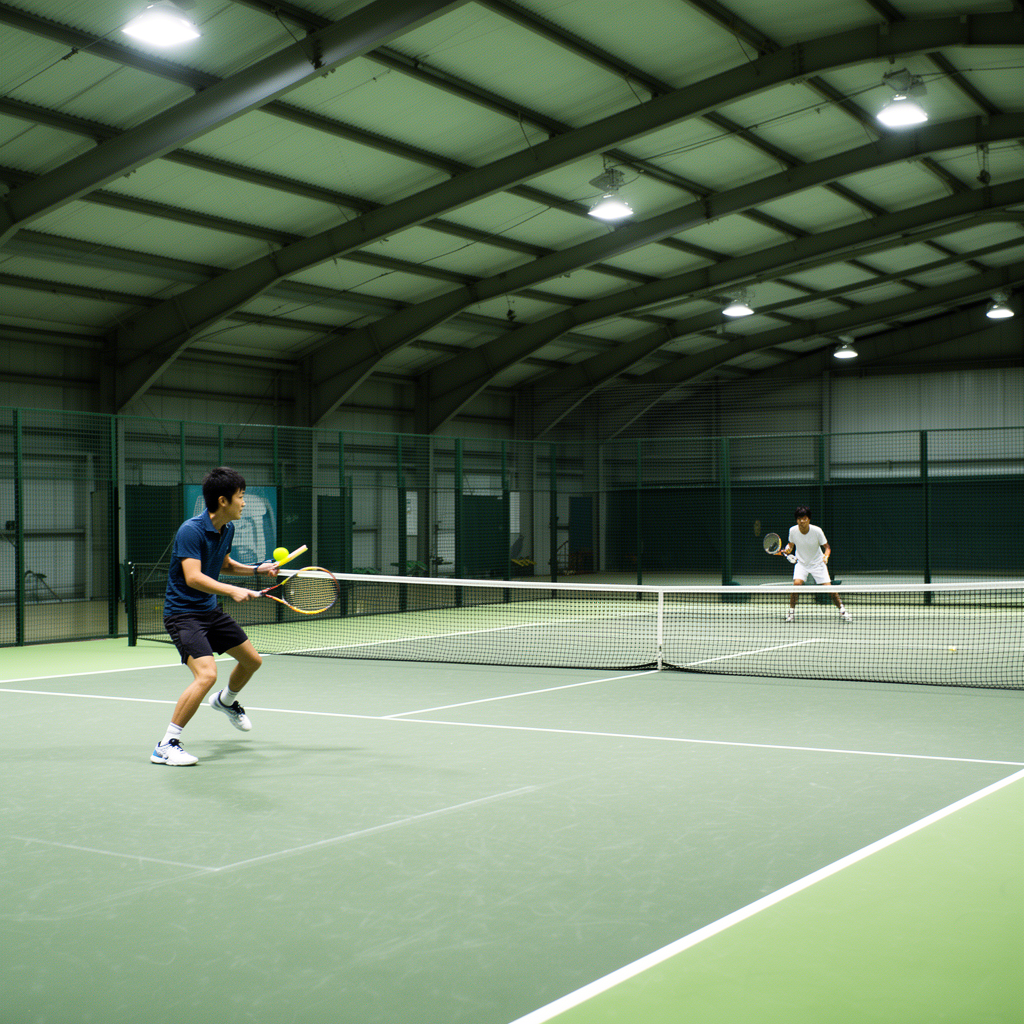
Indoor tennis facilities are less common but provide a controlled environment for training. These courts are sheltered from rain and often offer more stable playing conditions.
Advantages of indoor lessons
The biggest benefit is consistency. Lessons can proceed regardless of weather, allowing structured training without interruption. This is especially useful for beginners who need regular repetition to build fundamentals.
Lighting and court conditions are also consistent, which helps players focus on technique rather than external distractions.
Limitations of indoor lessons
Indoor courts are usually more expensive and less available. They may also feel less realistic compared to outdoor match conditions, especially for players preparing for tournaments.
Which option is better for beginners
For most beginners, outdoor tennis lessons are sufficient and widely recommended because they provide accessibility and real-world playing experience. However, indoor lessons can be beneficial for those who want uninterrupted training schedules or are preparing for competitive play.
Many players in Singapore use a hybrid approach, combining outdoor lessons for practical experience with occasional indoor sessions for consistency.
How coaches decide between indoor and outdoor training
Coaches typically make decisions based on three factors: student goals, weather conditions, and court availability. Beginners often start outdoors for exposure to natural conditions, while advanced players may incorporate indoor sessions for technical refinement.
Final comparison
Both indoor and outdoor tennis lessons have clear advantages. Outdoor training builds adaptability and realism, while indoor training provides consistency and controlled learning conditions. The best approach depends on the student’s schedule, budget, and long-term tennis goals.