
Tennis doubles is often misunderstood as simply “singles with four players,” but in reality it is a highly tactical format where positioning, teamwork, and decision-making matter more than raw power. For players taking tennis lessons or looking to improve match results quickly, doubles is one of the fastest ways to develop game intelligence, reflex control, and court awareness.
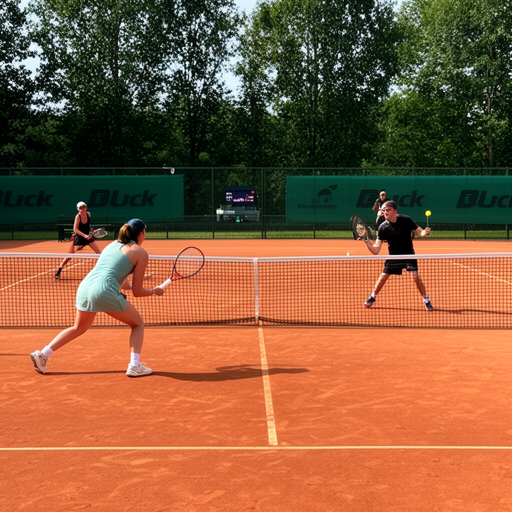
Whether you are a beginner or intermediate player, mastering doubles strategy can immediately improve your win rate.
Table of Contents
- Introduction to Doubles Strategy in Tennis
- Understanding Court Positioning and Roles
- Effective Communication Between Partners
- Serving Strategy in Doubles
- Returning Strategy and Pressure Creation
- Net Play and Poaching Techniques
- Common Doubles Formations Explained
- Smart Shot Selection and Rally Management
- Beginner Mistakes in Doubles Play
- How Tennis Lessons Help Improve Doubles Performance
- Final Thoughts
1. Introduction to Doubles Strategy in Tennis
In tennis doubles, two players form a team on each side of the court. Unlike singles, where covering space is an individual effort, doubles is about coordinated movement and shared responsibility.
The key to success is not just hitting well—it is about positioning, anticipating opponents, and creating pressure together.
Players who take structured tennis lessons often find that doubles helps them improve faster because they get more frequent touches, faster rallies, and clearer tactical patterns.
2. Understanding Court Positioning and Roles
Positioning is the foundation of doubles success.
Each team usually has two roles:
- Server / baseline player: initiates play and controls depth
- Net player: intercepts and finishes points
A strong doubles team always moves as a unit. When one player moves forward or sideways, the partner must adjust accordingly.
Key positioning principles:
- Stay compact (avoid large gaps between partners)
- Move side-to-side together
- Protect the middle first (the “money zone”)
The center of the court is the most important area in doubles because most winning shots are created there.
3. Effective Communication Between Partners
Communication is often the difference between winning and losing tight matches.
Simple verbal cues are enough:
- “Mine” / “Yours”
- “Switch”
- “Let it go”
- “Bounce” (for letting balls go)
Non-verbal communication is equally important:
- Hand signals before serves
- Eye contact before poaching
- Racket positioning to signal intentions
Good communication reduces hesitation, which is one of the biggest causes of lost points in beginner and intermediate doubles play.
4. Serving Strategy in Doubles
Serving in doubles is less about power and more about placement and teamwork.
Effective serve strategies:
- Serve wide to open the court
- Use body serves to jam returners
- Aim for consistency over speed
A strong doubles serve sets up the net player to intercept weak returns.
Many players in tennis lessons are taught to focus on “serve + first volley” as a single tactical unit rather than separate actions.
5. Returning Strategy and Pressure Creation
Returning in doubles is about neutralizing the server’s advantage and immediately putting pressure on the net player.
Smart return strategies:
- Aim low over the net to reduce poaching chances
- Target the server’s feet
- Return crosscourt for higher margin
Avoid over-hitting. A controlled return often wins more points than aggressive winners.
6. Net Play and Poaching Techniques
Net play is where most doubles points are decided.
Key skills:
- Volley control (not just power)
- Quick reaction time
- Anticipation of opponent shots
Poaching (crossing into your partner’s side to intercept a ball) is a high-impact tactic used to surprise opponents.
However, timing is critical. Poorly timed poaches open up easy winners for the other team.
7. Common Doubles Formations Explained
1. Standard Formation
One player at baseline, one at net. Most beginner-friendly setup.
2. Both Up Formation
Both players at the net to apply pressure and shorten points.
3. Both Back Formation
Defensive formation used when under pressure.
4. I-Formation
Server crouches near center; net player moves unpredictably to confuse returner.
Each formation has strengths depending on opponent style and match situation.
8. Smart Shot Selection and Rally Management
Doubles rewards consistency and smart placement over risk.
High-percentage shots:
- Crosscourt rallies
- Deep returns
- Low volleys at feet
Avoid:
- High-risk line shots early in rallies
- Overhitting from defensive positions
A key principle in advanced tennis lessons is: win through positioning, not power.
9. Beginner Mistakes in Doubles Play
Common errors include:
- Standing too far apart from partner
- Both players chasing the same ball
- Ignoring net player positioning
- Overhitting returns
- Lack of communication
Fixing these mistakes alone can significantly improve match outcomes.
10. How Tennis Lessons Help Improve Doubles Performance
Structured coaching accelerates doubles improvement in several ways:
- Correct positioning habits early
- Learning tactical formations properly
- Developing volley and net confidence
- Improving serve + return patterns
- Building match awareness through drills
Players who combine private or group tennis lessons with regular match play typically improve doubles performance much faster than solo practice.
11. Final Thoughts
Tennis doubles is a tactical game built on coordination, anticipation, and smart decision-making. While technique matters, strategy plays an even bigger role in determining outcomes.
By focusing on positioning, communication, serve-return patterns, and net control, players can quickly elevate their performance level.
For anyone serious about improving through tennis lessons, doubles is one of the most effective formats to develop real match intelligence and long-term consistency.