
Table of Contents
- Introduction
- Why Working Adults Are Taking Tennis Lessons
- Time Constraints and How Coaching Adapts
- Best Training Formats for Busy Schedules
- Early Morning vs Evening Tennis Lessons
- Weekend Training Options in Singapore
- How Fast Can Busy Adults Improve
- Private vs Group Lessons for Working Professionals
- Choosing Convenient Court Locations
- Fitness, Recovery, and Injury Prevention
- How to Stay Consistent With a Hectic Schedule
- Conclusion
Introduction
Tennis lessons for busy working adults in Singapore are becoming increasingly popular as professionals look for structured ways to stay active despite demanding schedules. Tennis is especially suitable because it combines fitness, stress relief, and social interaction in a single activity that can be adapted to different time constraints.
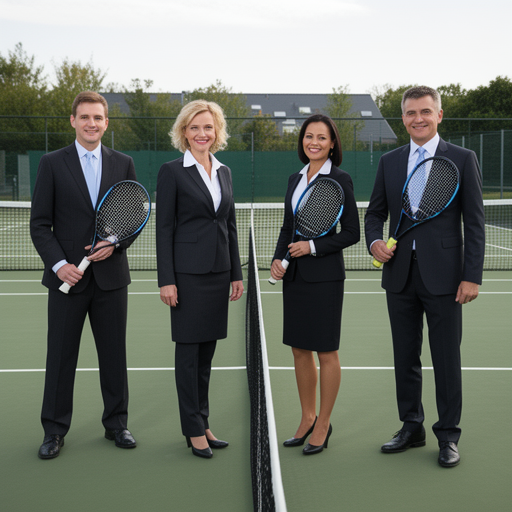
Unlike traditional fitness routines, tennis feels less repetitive and more engaging, which makes it easier for adults to stay committed long term.
Why Working Adults Are Taking Tennis Lessons
Many working adults in Singapore turn to tennis as an alternative to gym workouts or running. The main appeal is that tennis does not feel like a repetitive exercise routine—it is a skill-based sport with continuous learning.
Another reason is stress management. After long working hours, tennis provides a mental break that requires focus on movement and timing rather than work-related thoughts.
Social interaction also plays a role. Tennis allows professionals to connect with friends, colleagues, or new training partners in a structured environment.
Time Constraints and How Coaching Adapts
One of the biggest challenges for working adults is time limitation. Most professionals can only commit to one or two sessions per week.
Coaching programmes in Singapore often adapt by focusing on high-efficiency training. Instead of long repetitive drills, sessions are structured to maximise learning within limited time.
Coaches typically prioritise essential fundamentals such as grip, footwork, and rally consistency so that progress continues even with limited practice frequency.
Best Training Formats for Busy Schedules
For busy adults, short but consistent training sessions are more effective than irregular long sessions.
Private lessons are often preferred because they allow focused improvement in a shorter time. However, some adults also choose small group sessions for affordability and social engagement.
Hybrid training—combining one private session with occasional group play—is one of the most efficient approaches for working professionals.
Early Morning vs Evening Tennis Lessons
Early morning tennis lessons are popular among professionals who want to train before work. These sessions typically offer cooler temperatures and fewer court bookings.
Evening lessons are more common and convenient for most working adults. However, court availability may be more competitive, and energy levels can vary after a long workday.
Both options are effective as long as consistency is maintained.
Weekend Training Options in Singapore
Weekends are often the most flexible time for working adults to take tennis lessons. Longer sessions can be scheduled without rushing, allowing for more detailed coaching.
Weekend group classes are also common, providing opportunities to play with a wider variety of partners.
However, courts can be more crowded on weekends, so advance booking is usually necessary.
How Fast Can Busy Adults Improve
Improvement speed depends more on consistency than total hours spent.
With one session per week, most adults can learn basic rallying and stroke control within 2 to 3 months.
With two sessions per week, progress becomes noticeably faster, often reaching a comfortable recreational level within 4 to 6 months.
Even with limited time, structured coaching ensures steady improvement over time.
Private vs Group Lessons for Working Professionals
Private lessons are ideal for busy adults because they maximise learning efficiency. Each minute of the session is tailored to individual needs, reducing wasted time.
Group lessons are more affordable and provide social interaction, but progress may be slightly slower due to shared coaching attention.
Many professionals choose private lessons for skill development and join group play sessions for practice and enjoyment.
Choosing Convenient Court Locations
Convenience is critical for consistency. In Singapore, travel time can significantly affect attendance rates.
Choosing courts near home or office increases the likelihood of regular participation. Many coaching services also offer condo-based training, which is especially convenient for residents.
Reducing travel friction is one of the most important factors in maintaining long-term tennis habits.
Fitness, Recovery, and Injury Prevention
Busy adults often face fatigue from work, so proper recovery is important.
A short warm-up before playing helps reduce injury risk and improves performance. Stretching after sessions also helps with muscle recovery.
Because tennis involves sudden movements, beginners should avoid overtraining in the early stages to prevent strain injuries.
How to Stay Consistent With a Hectic Schedule
Consistency is the biggest challenge for working adults. The key is scheduling tennis like any other important appointment.
Booking fixed weekly sessions helps build routine. It also reduces decision fatigue during busy work weeks.
Setting realistic goals, such as playing once a week, is more sustainable than aiming for overly ambitious schedules.
Conclusion
Tennis lessons for busy working adults in Singapore are highly effective when structured around time constraints and consistency. Even with limited weekly sessions, adults can steadily improve their skills, fitness, and enjoyment of the game.
The key is choosing the right coaching format, maintaining a realistic schedule, and prioritising consistency over intensity.