
Improving in tennis is not just about playing more matches—it is about learning from them. Professional players spend a large part of their development time analyzing performance, identifying patterns, and correcting repeated mistakes.
For recreational and intermediate players, learning how to review matches effectively can dramatically speed up improvement, especially when combined with structured tennis lessons.
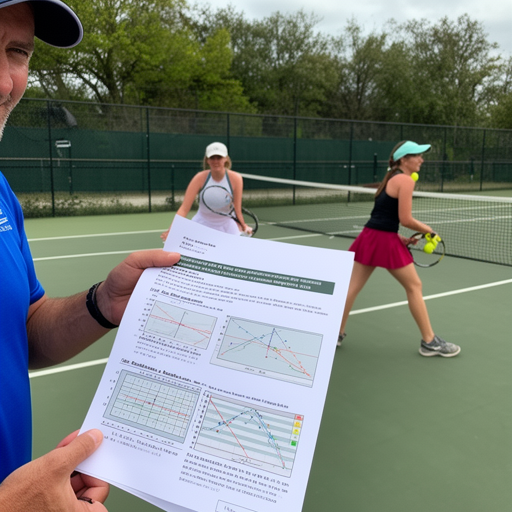
This guide shows you a simple but powerful framework to analyze your own tennis matches like a coach would.
Table of Contents
- Why Match Analysis Is Essential for Improvement
- What to Track During a Tennis Match
- Using Video Analysis Effectively
- Key Performance Metrics to Review
- Identifying Tactical Strengths and Weaknesses
- Common Mistakes Players Miss in Self-Review
- Simple Match Review Framework (Post-Match Routine)
- How Coaches Use Match Analysis in Tennis Lessons
- Turning Insights Into Training Plans
- Final Thoughts
1. Why Match Analysis Is Essential for Improvement
Most players think improvement comes from more practice, but real progress comes from understanding why points are won or lost.
Match analysis helps you:
- Identify repeated technical errors
- Understand tactical decision-making patterns
- Recognize pressure-related mistakes
- Track improvement over time
- Train with purpose instead of guesswork
Without analysis, players often repeat the same mistakes across multiple matches without realizing it.
2. What to Track During a Tennis Match
You don’t need advanced tools to start analyzing your game. Even simple observation can be powerful.
Key things to track:
- First serve percentage
- Double faults per set
- Unforced errors (forehand/backhand)
- Winners vs forced errors
- Net points won/lost
- Break points converted or saved
These basic stats already reveal a lot about performance patterns.
3. Using Video Analysis Effectively
Recording your matches is one of the fastest ways to improve awareness.
What to look for in video:
- Position after each shot (court balance)
- Footwork during rally exchanges
- Serve toss consistency
- Shot selection under pressure
- Recovery speed after hitting
Even simple phone recordings can reveal mistakes you don’t notice in real time.
Many structured tennis lessons now incorporate video feedback because visual learning accelerates correction.
4. Key Performance Metrics to Review
To analyze like a pro, focus on patterns—not just individual points.
Important metrics:
- Unforced error ratio (how many points you give away)
- Rally length success rate (short vs long rallies)
- Serve +1 effectiveness (what happens after your serve)
- Return depth consistency
- Pressure point performance (deuce/ad points)
These metrics show whether your game breaks down under pressure or remains stable.
5. Identifying Tactical Strengths and Weaknesses
Match analysis is not only technical—it is also tactical.
Ask yourself:
- Do I win more points crosscourt or down the line?
- Am I stronger defending or attacking?
- Do I struggle against high balls or low slices?
- Do I perform better at the net or baseline?
Understanding your natural tendencies helps you build a game style instead of just reacting during matches.
6. Common Mistakes Players Miss in Self-Review
Many players misinterpret what they see.
Common errors:
- Blaming technique instead of footwork
- Focusing only on winners instead of errors
- Ignoring opponent patterns
- Not considering fatigue during analysis
- Overestimating “good shots” that were actually low percentage
Good analysis is objective, not emotional.
7. Simple Match Review Framework (Post-Match Routine)
You don’t need a complex system. A 10–15 minute review is enough.
Step-by-step routine:
- Write final score and match context
- List 3 things that worked well
- List 3 repeated mistakes
- Identify 1 tactical problem
- Choose 1 focus area for next session
This keeps improvement structured and actionable.
8. How Coaches Use Match Analysis in Tennis Lessons
Coaches use match review to personalize training.
In structured tennis lessons, analysis helps:
- Design drills based on real match weaknesses
- Correct technical issues with evidence
- Improve tactical decision-making
- Track progress over weeks and months
- Build mental resilience under pressure
A good coach does not just feed balls—they interpret your match behavior and guide adjustments.
9. Turning Insights Into Training Plans
Analysis is only useful if it leads to action.
Example:
If you notice:
- Too many backhand errors → add targeted backhand repetition drills
- Weak second serve → focus on spin serve consistency
- Poor net success → increase volley reaction drills
Each match becomes a blueprint for your next training session.
10. Final Thoughts
Tennis improvement accelerates when players shift from simply playing matches to actively studying them. Match analysis turns experience into learning and helps you avoid repeating the same mistakes.
When combined with structured tennis lessons, self-review becomes even more powerful because coaching feedback and personal insights reinforce each other.
The best players are not just those who play the most—they are the ones who understand their game the best.