
Starting tennis lessons for the first time can feel exciting, but it is also normal to have questions about what will happen during the first session. You may wonder whether you need to know how to play already, what equipment you need, how the coach will teach you, and whether you will actually be able to hit the ball.
The good news is that beginner tennis lessons are designed to introduce the sport gradually. You do not need to arrive with perfect technique or previous tennis experience. A good tennis lesson gives you an opportunity to learn the fundamentals, become comfortable on the court, and understand how to practise effectively.
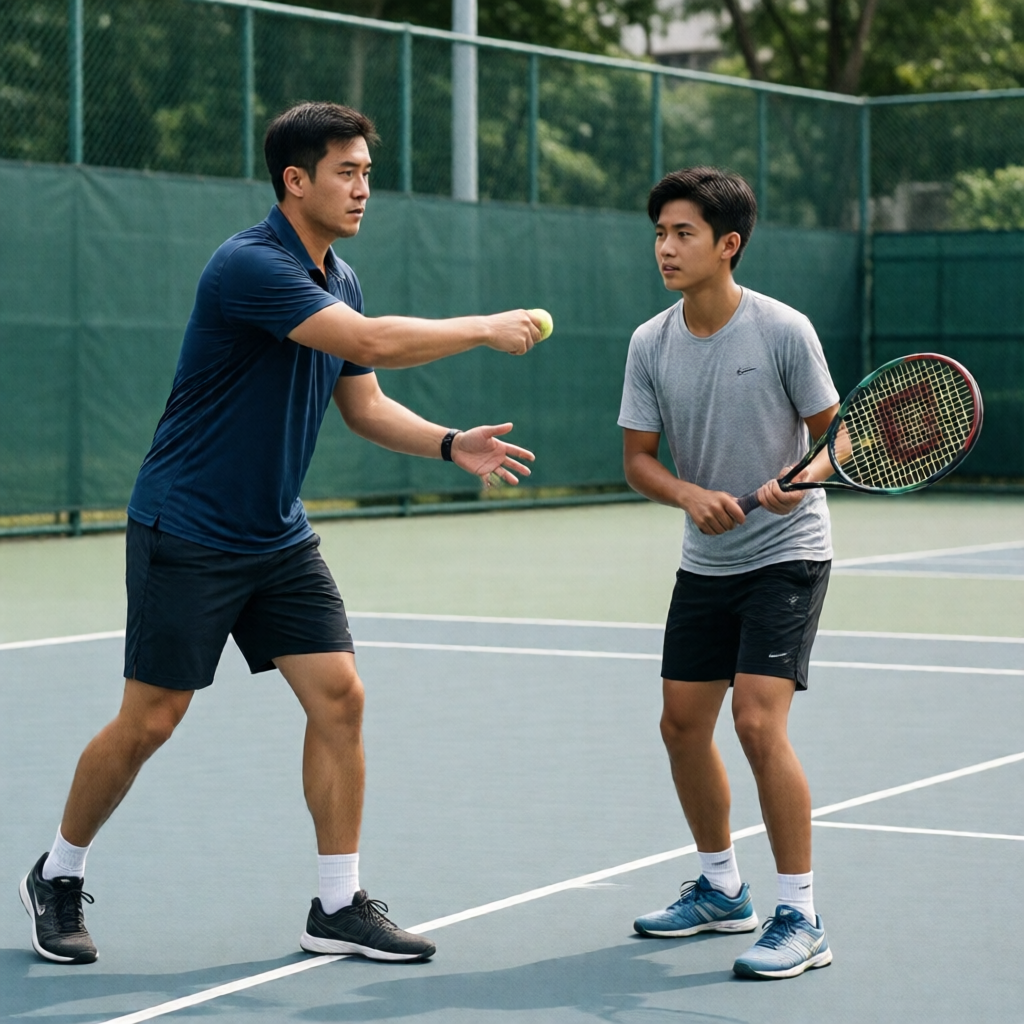
For beginners looking for tennis lessons in Singapore, knowing what to expect can make the first session more comfortable and productive.
Table of Contents
- Do You Need Previous Tennis Experience?
- What Happens Before the Lesson Starts?
- Your Coach Will Assess Your Starting Level
- Learning the Basic Tennis Strokes
- Footwork and Court Movement
- Understanding Tennis Technique
- Beginner Tennis Drills
- How Long Does It Take to Improve?
- What Should You Bring to Your First Lesson?
- What Happens After Your First Tennis Lesson?
- Making the Most of Your Tennis Lessons
Do You Need Previous Tennis Experience?
No previous tennis experience is required for most beginner tennis lessons.
A coach can start by introducing basic movements, racket handling and ball control before progressing to more advanced techniques. Beginners may initially struggle to make consistent contact with the ball, and this is completely normal.
Your first lesson is not a test. It is an introduction to the movements and skills that you will gradually develop through regular practice.
If you have played other racket sports or participated in sports such as badminton, squash or table tennis, you may already have some useful coordination skills. However, tennis has its own technique, court positioning and movement patterns.
What Happens Before the Lesson Starts?
Your first tennis lesson will usually begin with a short introduction between you and your coach.
The coach may ask about your previous sporting experience, your reason for learning tennis and what you hope to achieve. For example, you might want to learn tennis as a recreational activity, improve your fitness, play with friends or eventually participate in matches.
Your coach may also explain how the lesson will be structured.
For a beginner, the session may include a warm-up, basic movement exercises, racket technique, ball-control exercises and simple hitting drills.
Understanding your goals allows the coach to adjust the lesson according to your current needs.
Your Coach Will Assess Your Starting Level
Even if you have never played tennis before, your coach will usually observe your coordination and movement during the first session.
This does not necessarily mean completing a formal assessment. Instead, the coach can learn about your ability by watching how you hold the racket, move toward the ball and attempt basic strokes.
If you already have some tennis experience, the coach may focus on identifying areas that need improvement.
This initial assessment helps determine the appropriate pace for your tennis coaching. Beginners generally benefit from learning fundamental movements before moving into more complicated drills.
Learning the Basic Tennis Strokes
One of the main parts of beginner tennis lessons is learning the basic strokes.
You may be introduced to the forehand first because it is one of the fundamental shots used during rallies. Your coach will demonstrate how to prepare the racket, position your body, swing through the ball and complete the follow-through.
You may also begin learning the backhand.
Depending on your experience and lesson structure, your coach may introduce either a one-handed or two-handed backhand and explain the basic differences.
The goal of the first lesson is not necessarily to produce technically perfect strokes. Instead, you are beginning to understand the correct movement and developing the coordination needed to repeat it.
Footwork and Court Movement
Tennis is not only about swinging a racket.
Moving into the correct position before hitting the ball is an important part of becoming a better player. For this reason, tennis coaches often introduce basic footwork during beginner lessons.
You may practise moving forward, backward and sideways while maintaining balance.
Your coach may also teach you how to recover toward an appropriate court position after hitting the ball.
Learning these movements early can help prevent beginners from developing the habit of standing still and reaching for every shot.
As your tennis skills improve, footwork becomes increasingly important because better positioning gives you more opportunities to make controlled shots.
Understanding Tennis Technique
A tennis coach may make several small corrections during your first lesson.
These could involve your grip, racket preparation, body position, swing path or follow-through. Beginners sometimes try to hit the ball using only their arm, but effective tennis technique involves coordinated movement throughout the body.
Your coach may therefore introduce concepts such as turning the shoulders, using the legs and maintaining balance.
Do not worry if you cannot remember every instruction immediately.
Learning tennis is a gradual process. It is usually more useful to focus on one or two important technical improvements at a time rather than trying to change everything during a single session.
Beginner Tennis Drills
After learning basic movements, your coach may introduce simple tennis drills.
For example, you may begin by practising controlled shots from a short distance before gradually moving farther away from the net.
Other beginner exercises may involve the coach feeding balls toward you at a manageable pace. This gives you an opportunity to concentrate on your technique without having to generate every ball yourself.
As your consistency improves, drills can become more dynamic.
You may eventually practise hitting forehands and backhands while moving around the court, returning different types of balls and beginning short rallies.
These exercises help transform individual techniques into practical tennis skills.
How Long Does It Take to Improve?
There is no fixed amount of time required to become comfortable playing tennis.
Some beginners may feel more confident after several lessons, while others need more time to develop consistent ball control.
Your progress can depend on factors such as lesson frequency, practice outside coaching sessions, previous sporting experience, physical coordination and how regularly you play.
Taking tennis lessons once a week can provide consistent instruction, while additional practice can give you more opportunities to repeat the techniques introduced by your coach.
The important factor is consistency.
Tennis involves many movements that become more natural through repetition.
What Should You Bring to Your First Lesson?
You generally do not need complicated equipment for your first tennis lesson.
Comfortable sports clothing allows you to move freely, while proper tennis shoes can provide the support and grip required for court movement.
You should also bring sufficient drinking water because tennis can be physically demanding, particularly in Singapore’s warm and humid conditions.
If you own a tennis racket, you can bring it to the lesson. If you do not have one yet, check with your tennis coach or tennis centre beforehand to find out whether rackets are available.
There is no need to purchase expensive equipment before you understand what type of racket and equipment suits your playing style.
What Happens After Your First Tennis Lesson?
At the end of your first lesson, your coach may provide feedback about the areas you should focus on next.
For example, you may need to work on your forehand contact point, improve your movement or become more comfortable with your racket grip.
Your coach may also suggest simple exercises that you can practise between lessons.
The next lesson will usually build on what you have already learned rather than starting completely from the beginning.
Over time, your tennis coaching can progress from basic stroke development to rallying, serving, court positioning and eventually match situations.
Making the Most of Your Tennis Lessons
Your first tennis lesson is the beginning of a learning process rather than a measure of your ability.
Try to listen carefully to your coach, ask questions when something is unclear and focus on repeating the correct movements. Avoid becoming frustrated when you miss the ball because mistakes are a normal part of learning tennis.
If possible, practise between lessons. Even short practice sessions can help reinforce what you learned during coaching.
Regular tennis lessons combined with consistent practice can help you gradually develop better technique, coordination, movement and confidence.
Whether you are learning tennis for fitness, recreation or future match play, starting with the fundamentals gives you a strong foundation for continued improvement.
Final Thoughts
Your first tennis lesson in Singapore should be an opportunity to become familiar with the court, racket and basic movements of the game. You do not need to be an experienced player before joining a lesson.
A coach can introduce the fundamentals step by step, observe your current ability and adjust the training according to your progress.
With regular tennis coaching and practice, the movements that initially feel unfamiliar can gradually become more natural. The key is to focus on steady improvement rather than expecting to master everything in your first session.